
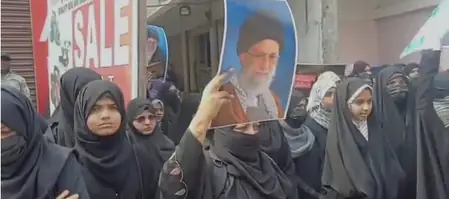
In a powerful show of unity and grief, Hyderabad’s Shia population, including women and children, flooded the streets Sunday to denounce the US-Israel operation that killed Iran’s top leader, Ayatollah Ali Khamenei. The old city’s heart—Purani Haveli, Noor Khan Bazaar, Darulshifa—pulsed with outrage over the Saturday strikes.
Dressed in black, protesters of all ages carried Khamenei’s photos high, shouting anti-assassination slogans that reverberated through narrow lanes. Known worldwide as Shias’ moral compass, his death left an indelible void.
A Shia leader rallied the gathering, hailing Khamenei as a shahid for defying oppressors without compromise. He attributed the incident to Muslims’ disunity, imploring collective strength moving forward.
Tanzeem-e-Jafri spearheaded the rally from Mazhar-e-Ibne-Khatoon in Purani Haveli, attracting massive crowds. Emotional scenes unfolded with mourners crying over the leader’s portraits, blending sorrow with steely resolve.
Police deployed extra forces across old city zones as a precaution against disturbances. The Iranian Consulate in Hyderabad observed mourning by half-masting its flag.
Details from Iran paint a grim picture: 86-year-old Khamenei slain in his office during joint attacks. His daughter, grandson, son-in-law, and daughter-in-law fell victim too. Reports also confirm deaths of Defense Minister Amir Nasirzadeh and Revolutionary Guards head Mohammad Pakpour.
Hyderabad’s inclusive protests—marked by family participation—signal broader implications for Shia identity and anti-Western sentiment. This event may catalyze discussions on Middle East conflicts’ ripple effects in South Asia, with eyes on potential escalations.