
From the bustling streets of Karachi to the rugged terrains of Skardu, Pakistan is witnessing a wave of fury directed at the United States over airstrikes on Iran that claimed the life of Supreme Leader Ali Khamenei. The US Embassy in Islamabad responded swiftly, issuing a stark warning to Americans in the country to heighten their vigilance amid brewing protests at key diplomatic locations.
Via a post on X, the embassy noted demonstrations already underway at consulates in Karachi and Lahore, with more expected outside its own premises in Islamabad and the Peshawar consulate. Recommendations include staying glued to local media, bolstering personal safety, avoiding mass gatherings, and updating STEP registrations.
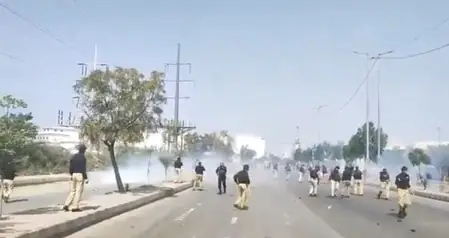
Sunday’s bloodshed in Karachi epitomized the dangers: nine lost their lives and 34 were injured in confrontations near the US Consulate. Dawn reported the grim scene on Mai Kolachi Road. Executive Director Dr. Mohammad Sabir Memon of SMBB Trauma Institute at Civil Hospital provided the casualty figures, echoed by Police Surgeon Dr. Sumaiya Syed.
The injured were triaged across facilities – Aga Khan University Hospital and Fatimid Foundation took seven, Civil Hospital’s trauma unit handled others, and JPMC admitted two police personnel.
In Gilgit-Baltistan, Skardu’s protests intensified post-Khamenei’s death, leading to arson attacks on UNMOGIP offices, a school, police superintendent’s office, and AKRSP headquarters in Skardu and Gilgit. Curfew was enforced, army deployed via CrPC Section 245, and security ramped up, with no reported fatalities.
This chain of events highlights the fragile geopolitical tightrope in the region, where distant strikes can spark local infernos. The US Embassy’s proactive alert aims to safeguard its citizens, but the protests signal deepening anti-Western sentiments that could test Pakistan’s stability for days to come.