
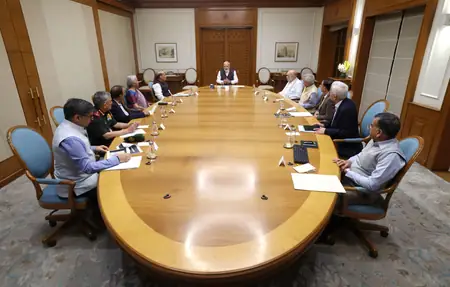
Tensions in the Middle East have prompted an immediate top-tier security conclave in New Delhi. Prime Minister Narendra Modi presided over the Cabinet Committee on Security (CCS) meeting at his 7 Lok Kalyan Marg residence, drawing Defence Minister Rajnath Singh, Home Minister Amit Shah, Foreign Minister S Jaishankar, Finance Minister Nirmala Sitharaman, NSA Ajit Doval, and Foreign Secretary Vikram Misri.
This elite panel, tasked with steering India’s security and foreign policy, assembles against a backdrop of US-Israel aerial assaults on Iranian sites, triggering retaliatory fire and the alleged demise of Supreme Leader Ayatollah Ali Khamenei. The fallout threatens to engulf the region in chaos, spiking global anxieties over energy and stability.
Focus areas include reviewing threats to Indian citizens in the Gulf—home to millions of workers—energy imports, critical shipping corridors, and India’s diplomatic footing. New Delhi has maintained neutrality, pushing for dialogue to avert escalation while protecting its vast interests.
Insider insights suggest talks on rapid-response evacuation schemes, oil market volatility countermeasures, and syncing with allies. Part of an ongoing security audit series, this huddle highlights India’s resolve amid international turbulence.
Outcomes may herald bold moves, from consular alerts to economic safeguards, positioning India as a steady force in turbulent times.