
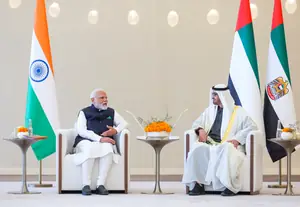
In a display of steadfast alliance, Prime Minister Narendra Modi spoke directly with UAE President Sheikh Mohamed bin Zayed Al Nahyan on Sunday, unequivocally denouncing the recent violent strikes against the UAE. Modi conveyed heartfelt condolences for the victims and pledged India’s full support in these testing times.
Modi’s X post captured the essence: ‘Discussed with President and brother Sheikh Mohamed bin Zayed Al Nahyan. Vehemently condemned UAE attacks, grieved the lives lost, and appreciated their support for Indian expatriates. India stands united with UAE, backing efforts for regional calm and security.’
This interaction underscores the multifaceted India-UAE partnership, thriving in trade volumes, oil imports, joint military exercises, terror combat, and diaspora affairs. Home to nearly 3.5 million Indians, UAE exemplifies successful bilateral people-centric diplomacy.
Parallelly, escalating West Asian volatility prompted PM Modi to preside over a Cabinet Committee on Security conclave late that evening. The backdrop included US-Israel aerial operations against Iran, coupled with speculation over Supreme Leader Khamenei’s elimination, stoking conflict escalation risks.
Prominent participants were Defence Minister Rajnath Singh, Home Minister Amit Shah, EAM S. Jaishankar, FM Nirmala Sitharaman, NSA Ajit Doval, and FS Vikram Misri. Post his multi-state itinerary, Modi swiftly reassumed command in Delhi at 9:30 PM.
India’s CCS stands as the ultimate authority on national security, integrating inputs from defense, internal affairs, diplomacy, and finance. This timely intervention reflects New Delhi’s vigilance, balancing empathy for partners like UAE with prudent safeguarding of broader interests in a powder-keg region.