
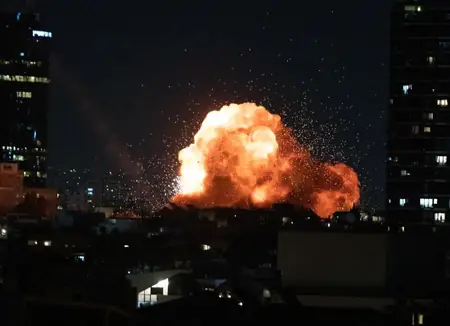
Tensions in the Middle East soared as the United States and a coalition of Gulf states issued a scathing joint rebuke against Iran’s missile and drone offensive. Retaliating to Israeli and American strikes, Iran targeted multiple countries, eliciting accusations of ‘dangerous escalation’ from the affected powers.
The US State Department released the statement on behalf of itself, Bahrain, Jordan, Kuwait, Qatar, Saudi Arabia, and the UAE, slamming the ‘irresponsible’ attacks on sovereign territories. Impacts rippled through Bahrain, Iraq (including Kurdistan), Jordan, Kuwait, Oman, Qatar, Saudi Arabia, and the UAE, endangering lives and damaging key assets.
‘These actions blatantly violate international rules, threaten sovereignty, and destabilize the area,’ the declaration asserted. Notably, Iran struck nations peripheral to the feud, a move decried as profoundly destabilizing.
Reaffirming unity, the partners vowed to safeguard their people and territories, invoking self-defense rights. They lauded collaborative air defense systems that blunted the assault’s worst effects, preventing mass casualties.
As Iran-Israel-US frictions intensify, drone and missile exchanges have emerged as the conflict’s flashpoint. Tehran’s enhanced capabilities worry observers, who see a disrupted balance despite defensive claims. US-Gulf military synergies, anchored by American bases, remain vital in this high-stakes aerial chess game.