
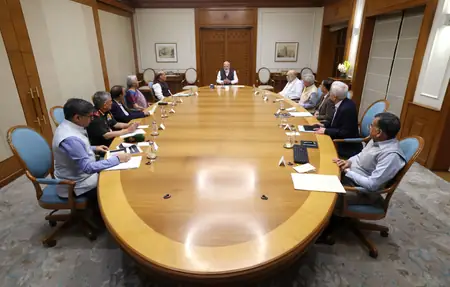
Prime Minister Narendra Modi presided over an emergency Cabinet Committee on Security (CCS) huddle deep into the night of February 28, grappling with West Asia’s spiraling crisis sparked by airstrikes on Iran. The briefing covered a barrage of attacks across Gulf territories, amplifying fears for stability.
At the heart of concerns lay the safety of millions of Indian workers and families embedded in the region. The CCS delved into collateral hardships: stranded travelers, exam-bound students facing cancellations, and overarching threats to security architectures, commerce, and economic vitality.
Directives flew thick and fast—relevant departments were tasked with exhaustive support mechanisms for impacted Indians, encompassing logistical aid, medical assistance, and communication lifelines. The committee advocated urgently for conflict cessation via diplomatic channels, shunning paths to wider war.
Modi personally dialed Israeli PM Benjamin Netanyahu, sharing India’s apprehensions on unfolding events, elevating civilian safeguards, and echoing demands for swift hostility endings. Complementing this, his Sunday call to UAE President Sheikh Mohamed bin Zayed expressed sympathies for attack casualties, renewed alliance commitments, thanked them for diaspora stewardship, and backed initiatives for calm and enduring peace.
India’s response exemplifies strategic foresight: fortifying citizen protections while nudging global players toward resolution. As the Middle East teeters, New Delhi’s interventions highlight its rising clout in fostering equilibrium amid turmoil.