
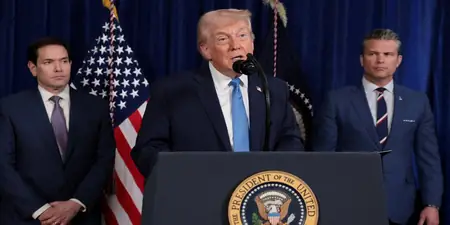
Top Trump officials, led by Marco Rubio and Pete Hegseth, will deliver a comprehensive update to Congress on Tuesday about a devastating U.S.-directed military campaign against Iran. The sessions, covering both House and Senate, aim to clarify the strike’s objectives amid partisan rifts over its authorization and reach.
Spokesperson Dylan Johnson outlined the lineup: State and Defense Secretaries, CIA Director Ratcliffe, and Joint Chiefs head General Caine. Preliminary talks with key security panels already occurred Sunday, spanning more than 90 minutes with cross-party staff.
Capitol Hill reactions underscore the divide. Republican Senate leader John Thune endorsed the action, framing Iran’s nuclear program and terror ties as an unacceptable risk. Democratic critic Hakeem Jeffries countered that the unconsulted ‘major military assault’ endangered American forces to potential Iranian counterstrikes.
Details emerging from press accounts paint a picture of overwhelming force. The New York Times reported a multi-phase assault that neutralized Iran’s command structure and air shields, enabling Israeli aircraft to patrol Tehran unopposed—echoing ex-IAF leader Amir Eshel’s assessment of Iran’s vulnerability.
Trump touted naval successes online, revealing the destruction of nine Iranian vessels. U.S. Central Command, per the Washington Post, focused ordnance on regime protection networks, eliminating four elite intelligence commanders in headquarters raids. Iran’s response targeted Gulf infrastructure, stranding 3,400+ flights and paralyzing Dubai’s main airport via drones.
The Wall Street Journal chronicled the chaos. Constitutionally, presidents lean on executive powers for targeted ops, while Congress reserves war declarations—a tension tested in prior conflicts like Syria and Libya. These briefings could pivot the narrative, either solidifying support or fueling demands for stricter checks.