
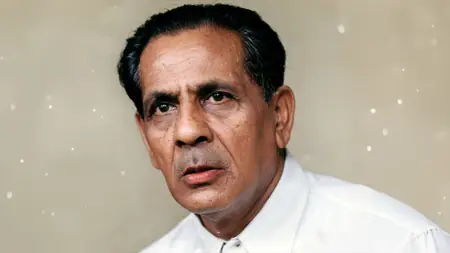
Sharp-witted, contradictory, and unapologetically bold, Firaq Gorakhpuri redefined Urdu poetry with infusions of pain, passion, and philosophical depth inspired by the Bhagavad Gita. Raghupati Sahay’s legacy, from his 1896 birth in Gorakhpur to his 1982 farewell in Delhi, stands as a testament to a life richly lived through words and action.
His shayari career ignited in 1918, yielding a decade’s bounty of over 100 ghazals and more, revitalizing Urdu with explorations of truth, love, homeland devotion, and nature’s tapestries. A signature melancholy emerged, capturing the era’s quest for authenticity.
Parallel to his pen was his patriotism. Ditching colonial bureaucracy, Firaq joined satyagraha movements, enduring 15 months in Agra Jail. Mushairas behind bars featured his defiant sher on unbroken gatherings of the alive.
Nehru tapped him for Congress duties, blending his academic career at Allahabad University with revolutionary zeal. Love’s grip struck in 1918—an elusive affair spanning 12 years, refined into profound ghazals of isolation and spiritualized desire. ‘Love must transcend the physical,’ he asserted, forging inner flames to temper carnal wishes.
Grief from family deaths—father’s in 1918, brothers’ untimely ends—manifested in nazms of poignant beauty amid despair.
‘Nagm-e-Haqiqat’ channels Gita’s essence: divine light animating creation, virtues and vices, historic valors from Kurukshetra to Karbala.
A 1924 patriotic ghazal, conceived in Allahabad solitude, fueled anti-imperial fire.
Literary honors included Sahitya Akademi (1960), Padma Bhushan, and Jnanpith for ‘Gul-e-Naghma.’ Firaq’s genius lay in harmonizing shayari’s tenderness with freedom’s roar and Gita’s eternity, offering timeless lessons in resilience and depth. His voice endures, urging us to embrace life’s full spectrum.