
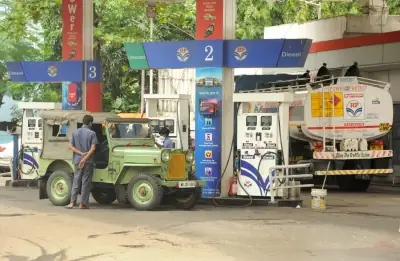
In the shadow of Iran’s turmoil, India emerges as an energy fortress. Authorities disclose healthy reserves: 25 days of crude, matching petroleum products, plus en-route supplies. LPG and LNG buffers complete a comprehensive safety apparatus.
Context is crucial. Sourcing 85% imports, India historically leaned on Middle East via Hormuz for half its crude. War’s outbreak crimped flows, but years of diversification—ramping up from Africa, Russia, USA—have rewritten the equation.
Oil giants IOC, BPCL, and HPCL sit on weeks-long hauls, fed by non-Gulf lanes. Government’s export embargo on products supercharges stockpiles, a tactical masterstroke.
Underground arsenals at Padur (2.25 MMT), Visakhapatnam (1.33 MMT), Mangaluru (1.5 MMT) stand ready. Chandikhol’s buildout expands the arsenal. Emergency draws can stabilize supplies, cushioning refiners from Brent’s $80+ surge—a 10% Iran penalty.
Fiscal strain mounts: $137 billion last year on crude; $100.4 billion this fiscal’s first 10 months for 206.3 MT. Higher bills fuel inflation, potentially crimping GDP.
Yet, India’s multi-pronged approach—broadened sources, cavernous reserves, export curbs—insulates against chaos. As markets reel, New Delhi’s preparedness underscores a maturing energy diplomacy, poised for whatever lies ahead.