
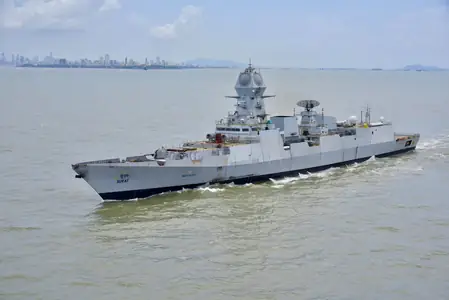
As the US-Israel-Iran confrontation disrupts Middle East travel, India’s naval might steps up. The guided-missile destroyer INS Surat patrols the Gulf of Oman, fully equipped to extract thousands of trapped Indian citizens if air evacuations falter.
International airlines grounded and sea routes choked have stranded expatriates. India’s response includes chartered flights, but the Navy’s persistent deployments provide robust contingency plans under vigilant alert status.
INS Surat’s stealth design evades detection, armed with potent BrahMos missiles for surface strikes, extensive air defense arrays, submarine hunters, and top-tier sensors. At 7,400 tons and 30 knots top speed, it’s built for endurance in contested waters.
Launched in 2017, Mission Deployment stations warships at Hormuz Strait for energy security, Aden Gulf against pirates, Seychelles for alternate routes, Maldives, Andamans, and Bengal Gulf. These positions protect vital trade—80% energy via Oman Gulf, 90% goods via Aden.
The Navy’s evacuation legacy is exemplary: Operation Kaveri (Sudan 2023), Samudra Setu (COVID 2020), Rahat (Yemen 2015), Safe Homecoming (Libya 2011), Sukoon (Lebanon 2006). Each rescued multitudes, showcasing logistical mastery.
In piracy-prone zones near Somalia, these assets deter threats and conduct joint maneuvers. Any Aden blockage spikes costs via longer African routes. INS Surat’s readiness reassures stranded Indians, affirming India’s global rescue capabilities amid brewing storms.