
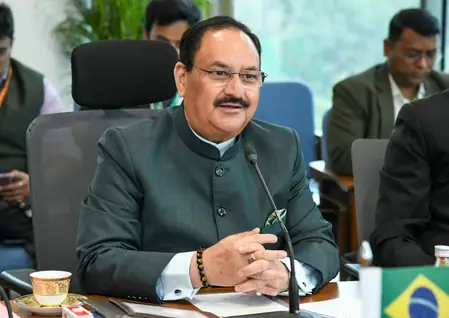
India’s chemical industry is on the cusp of a renaissance, with government forecasts predicting a jump to 5-6% of the global market by 2030, en route to $1 trillion in turnover by 2040. Union Minister JP Nadda shared these insights in a post-budget webinar, detailing the multifaceted push underway.
Rs 13,000 crore in funding underscores commitments to the Bio-Pharma Power Scheme and three new chemical parks—investments that will redefine competitiveness. The minister underscored the biologics boom: 40% of global drugs by 2035, spurred by $300 billion patent expirations through 2030.
India’s BioPharma Mission, flush with Rs 10,000 crore for the next half-decade, is tailor-made to capitalize on biosimilars. A mere 1% market capture here translates to Rs 2 lakh crore annual gains, a game-changer for the economy.
Nadda advocated for enhanced synergy in talent development via NIPER and the creation of 1,000 clinical trial sites to amplify R&D. The CDSCO’s role in swift regulatory nods for biosimilars and fermentation will be amplified.
Today, the sector churns out Rs 19.4 lakh crore, excelling in dyes and agrochem but bottlenecked by just 3% global presence, primarily due to infrastructure deficits. Rs 3,300 crore targets this with three advanced parks offering plug-and-play setups, superior waste management, logistics harmony, and ironclad security.
These facilities are engineered for efficiency, slashing costs by 20-40% through partnerships and promoting circular economy from inception. India’s chemical ascent is not merely aspirational—it’s strategically engineered for sustained global impact.