
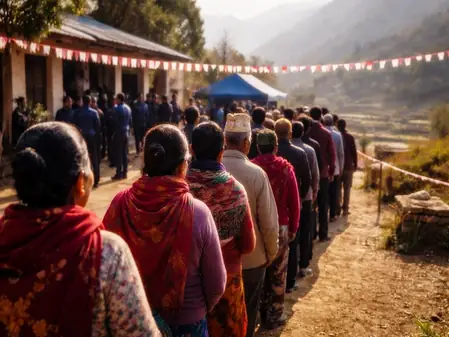
Nepal’s date with destiny arrives Thursday as parliamentary elections unfold nationwide, a testament to the country’s democratic spirit unbroken by last year’s Gen-Z revolt. Acting CEC Ram Prasad Bhandari implores 18.9 million voters to embrace their franchise boldly, rebuilding trust in institutions battered by turmoil.
At stake: 275 seats in the House of Representatives. The FPTP system will elect 165 directly, favoring constituency winners, while PR fills 110 to reflect party strengths proportionally—a nuanced approach to Nepal’s multi-ethnic polity.
The backdrop is grim: September’s Gen-Z movement turned fatal, with 77 deaths and property losses surpassing 84 billion Nepali rupees. Uncertainty loomed over the Himalayan state’s trajectory until PM Sushila Karki’s interim coalition charted a path to polls, restoring electoral momentum.
Bhandari’s message is unequivocal: “Elections empower you to choose representatives who govern by your will.” All logistics—ballots, EVM alternatives, disability-friendly setups, and staffing—are complete for the 10-hour voting window.
Voter demographics highlight inclusivity: 9.66 million males, 9.24 million females. The field bursts with 3,406 FPTP candidates and 3,135 PR aspirants, promising vibrant contests.
The Commission vows pristine polls—independent, impartial, fear-free. With materials dispatched and centers primed, Thursday’s verdict could cement stability, address Gen-Z grievances, and launch Nepal into a new era of accountable leadership.