
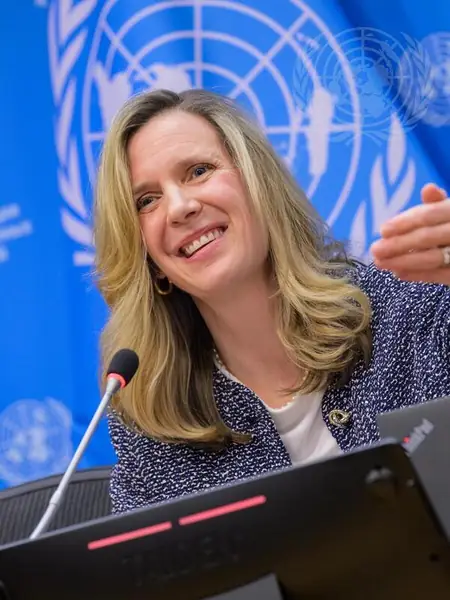
A senior UN Women official has lauded India’s banking revolution under PMJDY, crediting it with reshaping women’s futures by serving over 290 million accounts primarily to females. Sandra Hendricks, the organization’s Policy Director, called it a ‘global model’ during preparations for the 70th annual Commission on the Status of Women.
India’s scale is staggering: digital IDs and simplified bank account openings cover women and girls representing 20 percent of the world’s total. ‘Reducing barriers to digital banking nationwide is exemplary,’ Hendricks noted in her address.
The scheme’s impact is evident—women own 56 percent of PMJDY accounts, enabled by Aadhaar’s biometric universality. This fosters financial inclusion, enabling business startups and personal agency, proving laws can spark profound societal shifts.
This comes against UN data revealing women’s legal rights lag at 64 percent of men’s globally, hampered by biased frameworks. Guterres’ pre-meeting report demands participatory justice reforms to counter exclusion and imbalances.
India’s approach, blending technology and policy, exemplifies how targeted interventions yield equality gains, positioning the nation as a leader in women’s empowerment on the world stage.