
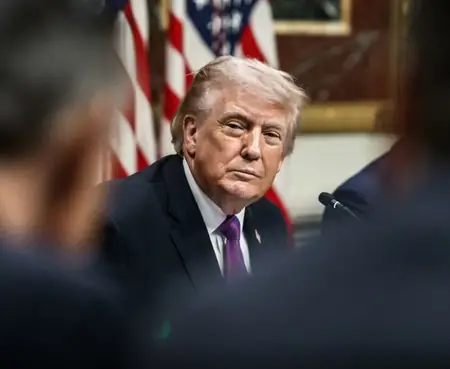
At a key White House gathering, President Donald Trump boldly claimed the U.S. has left China in the dust in the artificial intelligence arena. During discussions on the ‘Ratepayer Protection Pledge,’ he highlighted America’s forefront position in building next-generation AI systems.
‘We’re the world leader in AI. Ahead of China,’ Trump declared, casting AI as the ultimate battleground for superpowers. The winner, he argued, secures unparalleled military strength, a point echoed by Energy Secretary Chris Wright: ‘Whoever leads AI becomes the military superpower.’
Trump turned his fire on China’s control of the wind energy sector, slamming their production of ‘all the windmills’ and massive shipments to Europe. While Europeans bet big on these turbines for green energy transitions, Trump implied underwhelming outcomes and revealed China’s own restraint in wind reliance at home.
He recognized Beijing’s energy expansion but countered with U.S. initiatives to scale electricity for AI-driven demands like data centers. This dual focus on power and tech is non-negotiable for sustaining leadership.
The president touted incoming manufacturing waves, as carmakers from neighboring countries and Asia—Canada, Mexico, Germany, Japan, South Korea—pour resources into American plants, spurred by trade savvy. Semiconductors got a mention too, with Trump committing to onshore chip fabs, reducing vulnerabilities exposed by global events like those involving Taiwan.
This narrative of onshoring and innovation positions the U.S. as a magnet for investment. In an era of geopolitical chess, Trump’s strategy aims to fortify America’s core strengths against rising challengers.