
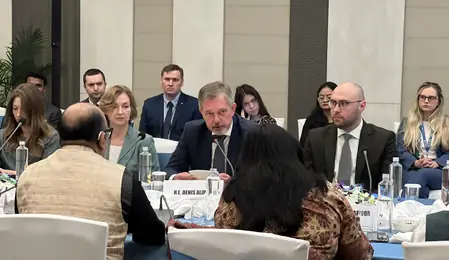
Tensions in West Asia have thrust energy security into the spotlight, with Russian Ambassador Denis Alipov advising India to chart its own course for oil amid rising prices. Addressing the media in New Delhi on Thursday, he pleaded for talks to end hostilities and fretted over a potential Hormuz Strait shutdown that could roil world fuel costs.
India must independently select its suppliers, Alipov noted, though Russia pledges unflinching readiness to meet Delhi’s demands. This pivotal remark underscores bilateral ties strained by regional mayhem.
‘Conflicts resolve through conversation alone. End it promptly,’ the diplomat implored. On projections for the war’s end, he deferred to U.S. insights, maintaining diplomatic poise.
Sparked by U.S.-Israeli airstrikes on Iranian targets to hobble missile arsenals and command structures, the strife claimed lives of elite Iranian officials, including Ayatollah Ali Khamenei. Iran’s fierce counteroffensive involved precision drone and missile strikes against American outposts, urban centers, and proxies throughout West Asia.
Moscow wasted no time in denouncing the February 28 strikes as lawless. Lavrov’s Saturday call with Araghchi, prompted by Tehran, covered efforts to stave off U.S.-Israeli advances, which have stalled peaceful nuclear resolutions. Iran plans to push for a UNSC emergency huddle.
The Russian minister slammed the incursions for breaching legal standards and courting disaster for stability. Insisting on de-escalation and diplomatic tracks, Lavrov affirmed Russia’s role in facilitating settlements via bodies like the UNSC, rooted in reciprocity and fairness.
As speculation mounts over Hormuz disruptions, Alipov’s words empower India to prioritize resilient partnerships. Russia’s steadfast offer positions it as a cornerstone for New Delhi’s energy resilience in uncertain times.