
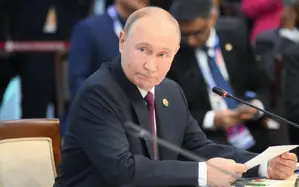
Tensions in West Asia prompted a crucial hotline exchange between Russia’s Vladimir Putin and Iran’s Masoud Pezeshkian, where the Russian leader advocated de-escalation through talks, explicitly ruling out force as regional conflicts rage with US and Israel implicated in strikes.
The Foreign Ministry’s Telegram post outlined Putin’s renewed condolences for casualties among Khamenei’s circle, armed forces, and civilians from the attacks. Russia views these as escalatory blows undermining stability.
Reaffirming Moscow’s doctrine, Putin called for instant ceasefire and diplomatic acceleration on Iran-related or pan-Middle East issues. His dialogues with GCC heads signal broader diplomatic maneuvering.
Iran’s president appreciated Russia’s unity against threats to sovereignty. Leaders shared updates on conflict progress, pledging multi-channel liaison.
Energy markets tremble: rising crude prices, Hormuz threats. Russian envoy Alipov in India clarified, ‘India decides supply chains; we’re available.’ He pushed dialogue, sidestepped war end-date queries: ‘Ask Washington.’
From late February condemnations to Lavrov’s Saturday call with Araghchi, Russia pushes back: stop strikes impeding peaceful nuclear resolution, convene UNSC emergently.
In this powder-keg scenario, Putin’s intervention highlights Russia’s mediator role, balancing support for Iran with global appeals for reason. India’s oil choices spotlight economic stakes, as superpowers jockey, reminding all that diplomacy, not destruction, charts the secure future.