
Consumer prices in India rose moderately in February, with retail inflation reaching 3.21 percent, a jump from January’s 2.74 percent mark. The Ministry of Statistics dropped this update Thursday, painting a nuanced picture of economic pressures.
Rural households faced 3.37 percent inflation, up from 2.73 percent, while urban consumers dealt with 3.02 percent versus 2.75 percent prior. Food inflation held steady at 3.47 percent nationally, mirroring rural-urban parity at 3.46 and 3.48 percent.
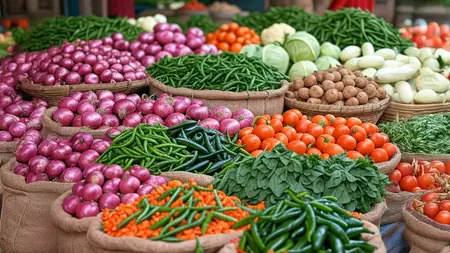
Year-on-year, five items saw the steepest drops: garlic led with -31.09 percent, onions -28.20 percent, potatoes -18.46 percent, arhar -16 percent, lychee -11.52 percent. These declines likely eased kitchen budgets significantly.
Conversely, silver jewelry ballooned 160.84 percent, gold and precious stone jewelry 48.16 percent, copra 46.16 percent, tomatoes 45.29 percent, cauliflower 43.77 percent, signaling luxury and produce volatility.
Inflation across categories: food & beverages 3.35 percent, pan/tobacco 3.49 percent, clothing/footwear 2.81 percent, housing/utilities 1.52 percent, education services 3.33 percent.
Top inflation states (pop. >5M): Telangana 5.02 percent, Rajasthan 3.53 percent, Kerala 3.50 percent, Andhra Pradesh 3.45 percent, West Bengal 3.44 percent.
Backed by meticulous fieldwork, NSSO teams gathered prices from 1,407 urban and 1,465 rural points weekly, achieving 100 percent coverage and near-perfect reporting in February.
These trends suggest controlled inflation within RBI’s comfort zone, bolstered by vegetable price corrections. Yet, spikes in metals and select foods warrant vigilance as supply chains adjust.