
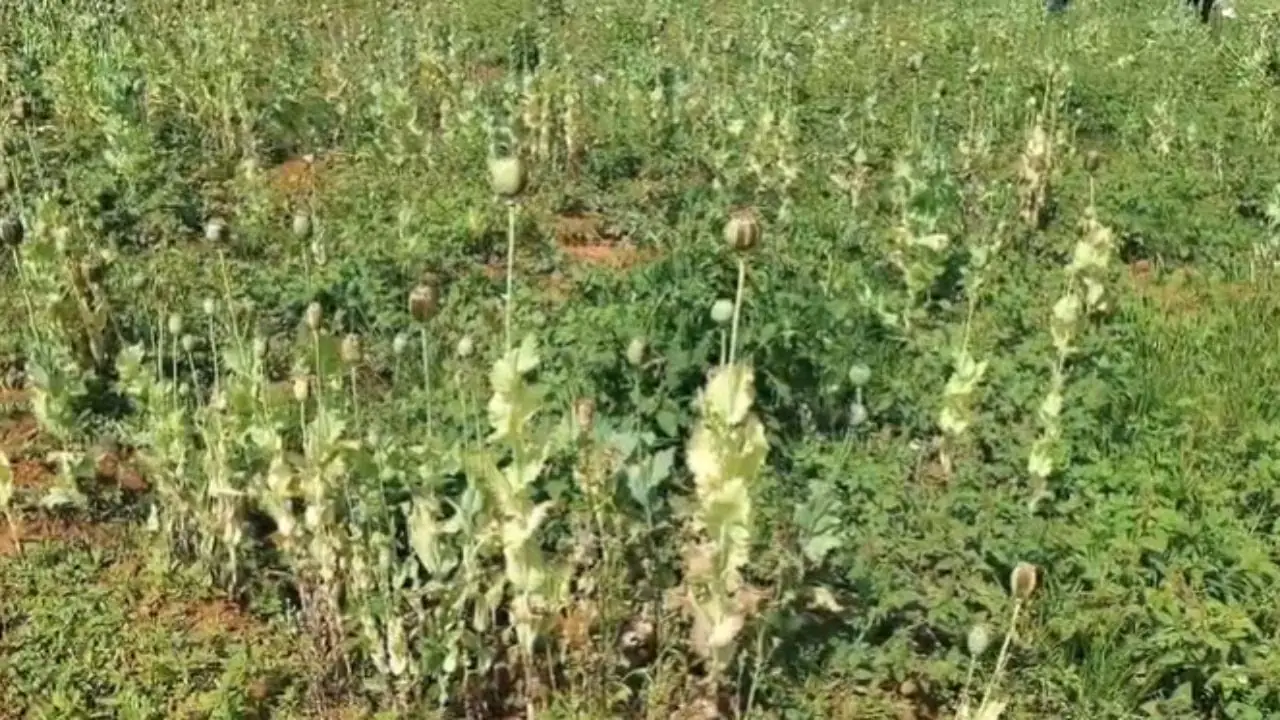
A wave of illicit opium farming has gripped Chhattisgarh, with police smashing operations in Durg and Balrampur districts that boast multi-crore valuations and startling connections to Jharkhand. Over ten arrests later, the scandals have ignited fierce political debates and calls for stricter border controls.
India permits opium only in licensed pockets of MP, Rajasthan, and UP, overseen for medical use. Chhattisgarh’s ventures are outright illegal under NDPS, inviting decade-long prison terms and massive penalties.
Durg’s Samoda grabbed headlines first: hidden within cornfields across 4-6 acres, the crop—guarded aggressively—was worth 7-8 crores. BJP’s Vinayak Tamrakar led the charge, earning swift expulsion and handcuffs with two aides post-March 6 raid. Bulldozers leveled the site amid opposition fury; Congress’s assembly uproar and Baghel’s accusations painted a damning picture of ruling party complicity.
Balrampur’s Kusmi station logged 2-3 acres of harvest-ready poppies, leased fraudulently by a Jharkhand man for ‘flowers.’ Five arrests followed crop destruction. Then, Chandadandi’s 9-acre haul implicated Jharkhand traders on the run, spurring district-wide searches.
Legal contrasts are stark. MP’s Malwa—famed Mandsaur, Neemuch, Ratlam—relies on annual CBN nods from Gwalior; farmers deliver exclusively to the state. Rajasthan’s specified zones in Jhalawar et al. enforce identical protocols.
As Jharkhand threads unravel, these busts signal escalating narco-threats in central India. Enhanced policing and inter-state cooperation are imperative to uproot this menace.