
Close Menu
    Facebook X (Twitter) Instagram
    Trending
    • Pragati Portal is a symbol of New India’s New Work Culture: Chief Minister Shri Vishnu Deo Sai
    • Chief Minister Shri Vishnu Deo Sai to release the 24th installment of Mahtari Vandan Yojana from Narayanpur
    • Somi Ali’s Throwback: Sanjay Dutt’s Grounded Stardom
    • Gujarat Voter Cleanup: 17L Apps for Additions and Deletions in SIR
    • Bihar Updates Land Rules: PAN Card Must for 10L+ Deals Today
    • End Leprosy Stigma: India’s Fight on Awareness Day
    • Smriti Mandhana Reveals RCB’s Key Final Motivation
    • Rasha Thadani Debuts as Singer with Shiva Devotional ‘Chhap Tilak’
    Facebook X (Twitter) Instagram
    Report Wire
    • World
    • India
      • Chhattisgarh
      • Jharkhand
      • Bihar
    • Entertainment
    • Sports
    • Tech
    • Business
    • Health
    Report Wire
    Home»World»Bangladesh Polls: How Religion Fuels Election Divisions

    Bangladesh Polls: How Religion Fuels Election Divisions

    World January 29, 20262 Mins Read
    Facebook Twitter Pinterest LinkedIn Tumblr Email
    धर्म
    Share
    Facebook Twitter LinkedIn Pinterest Email

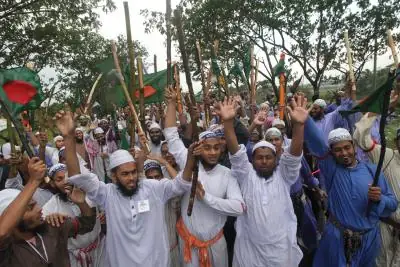
    Campaigning kicks off for Bangladesh’s February 12 polls, but a sinister narrative dominates: voting against certain parties means voting against Islam. A new report flags this as a well-worn smear tactic deployed when political credibility wanes, labeling foes as faithless.

    Religious extremism is reshaping society. Music education is curtailed under pious pretexts, mausoleums vandalized, performing arts threatened, and curricula rewritten with unchecked zeal. Prothom Alo contributor Hasan Firdous contextualizes this in a column, recalling how religion sanctioned the 1971 slaughter of Bengalis by Pakistani forces—a dark precedent alive today.

    ‘Political exploitation of faith is rampant now,’ he writes, pointing to parties with overt religious branding. Victory brings minority crackdowns, akin to Pakistan’s Ahmadis or Shia targets. Bangladesh sees a boom in attacks triggered by online posts against minorities.

    One party’s call to limit women to five-hour workdays masquerades as foresight but aims to dismantle their economic independence, tethering them to households. Jamaat-e-Islami’s playbook is telling: it soft-pedals Sharia in official stances for broader appeal, but leaders push it publicly, and cadres market their scale emblem as divine obligation—a ‘paradise pass’ no less.

    Such dissonance signals peril. As Bangladesh hurtles toward the ballot box, the fusion of mosque and ballot box imperils its secular ethos. Observers urge vigilance to prevent religion from derailing the democratic process and exacerbating communal tensions.

    Bangladesh Elections election campaign Islamic parties Jamaat-e-Islami Minority Rights Religion Politics Sharia law Bangladesh Women work hours
    Share. Facebook Twitter Pinterest LinkedIn Tumblr Email

    RELATED NEWS

    Women’s Political Stake in Bangladesh Slips Under Yunus Government

    January 29, 2026

    Invisible Wall Blocks Pakistan Girls’ Schooling Journey

    January 29, 2026

    S Jaishankar Holds Key Talks with US Ambassador Gor

    January 29, 2026

    Malawi Battles Cholera Surge and Polio Return in Blantyre

    January 29, 2026

    2026 Forecast: 14.4M in Afghanistan Face Health Shortage

    January 29, 2026

    Over 250 Indian Vehicles Aid Nepal’s March Polls Logistics

    January 29, 2026
    -Advertisement-
    © 2026 Report Wire. All Rights Reserved.
    • Terms & Conditions
    • About Us
    • Privacy Policy
    • Contact

    Type above and press Enter to search. Press Esc to cancel.