
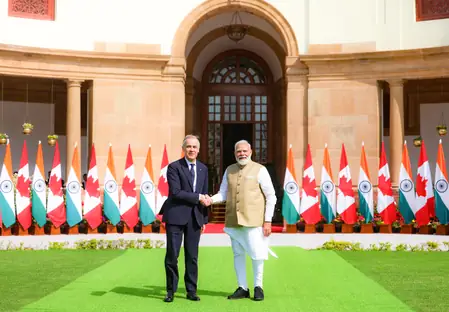
New Delhi buzzed with strategic significance as India and Canada sealed a $2.6 billion uranium supply deal, a game-changer for nuclear energy collaboration. PMs Modi and Carney presided over the signing at Hyderabad House, elevating economic synergies to new heights.
Tailored for India’s civilian nuclear needs, the agreement guarantees sustained fuel availability, supporting the push towards low-carbon energy security. Both nations view it as a bedrock for trustworthy energy partnerships worldwide.
Commitments extended to pioneering small modular and advanced reactors, fostering technological breakthroughs for sustainable power.
Talks propelled the CEPA forward, aiming for closure by end-2026, while Modi envisioned $50 billion in bilateral trade by 2030 to spur growth, jobs, and investments.
Broader accords spanned critical minerals, renewables, and people-to-people cultural links, with formal document swaps by Jaishankar and Anand.
Applauding Carney, Modi highlighted renewed momentum in relations built on shared democracy, inclusivity, and global good. The dialogue sought to forge these ideals into robust cooperation.
Renewable energy and climate efforts intensified, applauding Canada’s entry into India’s solar and biofuels alliances. Modi spotlighted burgeoning tech ties in AI, quantum, supercomputing, and chip manufacturing as hallmarks of natural synergy.