
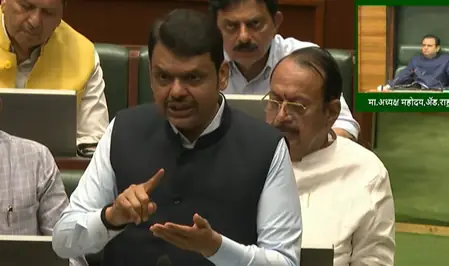
Fiscal discipline meets strategic investment as Maharashtra CM Devendra Fadnavis tabled ₹11,995 crore supplementary demands in the assembly Tuesday, prioritizing power relief and green energy amid soaring state debts.
Key allocations include ₹3,112.85 crore for electricity subsidies to agri-pumps, power looms, and textile users—direct support for grassroots economies. ₹803.94 crore fuels industrial incentives for small, medium, large firms, and mega projects under the incentive scheme.
Pushing sustainability, ₹4,792.02 crore transfers AIIB loan to Mahavitaran for solar agri-pumps, propelling the 2030 net-zero vision with 52% renewables. Jal Jeevan Mission gains ₹1,431.05 crore from central shares for water security.
Contextualizing the move: March 2025’s budget forecasted ₹45,890 crore revenue deficit, ₹9.32 lakh crore debt. Supplements in June (₹57,509.71 crore) and December (₹75,286.37 crore) exploded the gap beyond ₹2 lakh crore.
These demands smartly sidestep new costs, honing in on proven relief measures. Fadnavis eyes March 6 for the 2026-27 budget, signaling tough fiscal steps per his recent media address.
Globally, at WEF, he touted 16 GW solar target by 2025-end, 45 GW more by 2032 (70% solar), renewables leaping from 13% to 52% by 2030. Farmer electricity rates plummeted below ₹3/unit from ₹8, alleviating pressures across sectors. The ₹24,631 crore outlay for 5,630 MW pump storage hydro cements Maharashtra’s renewable leadership.