
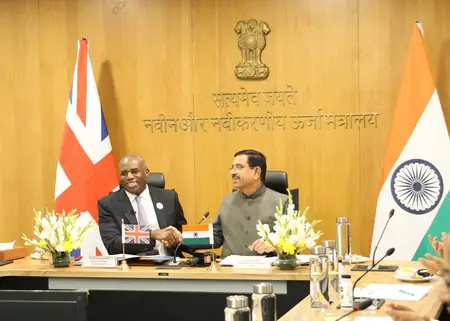
A new chapter in Indo-UK clean energy partnership unfolded in New Delhi as the Offshore Wind Taskforce was officially launched. Union Minister Pralhad Joshi and UK Deputy Prime Minister David Lammy spearheaded the event, with British High Commissioner Lindy Cameron in attendance.
Joshi clarified the taskforce’s operational nature, rooted in Vision 2035 and the latest Energy Dialogue, to deliver targeted leadership for India’s offshore wind growth.
The UK’s global prowess in offshore wind scaling pairs seamlessly with India’s market scale, long-term needs, and dynamic renewables landscape. Labeling it ‘Trustforce,’ Joshi stressed its role in overcoming shared hurdles through collaboration.
Practical cooperation spans three domains: enhancing ecosystem and market structures like seabed leasing and revenue stability; building infrastructure via port upgrades, domestic manufacturing, and vessel procurement; and streamlining finance with risk-sharing and capital inflows.
Reliability and security define India’s next energy leap, where offshore wind is indispensable. Sites off Gujarat and Tamil Nadu are primed, NIWE studies done, and Rs 7,453 crore funding earmarked for viability gaps. The sector requires sophisticated infrastructure, from ports to logistics and frameworks.
Integration with green hydrogen amplifies impact. As hydrogen agenda leader, India hits lows of Rs 279/kg hydrogen and Rs 49.75/kg ammonia via its mission’s bids. Offshore wind energizes industrial coasts and clusters, bolstering security and competitiveness.
India’s non-fossil fleet surpasses 272 GW—141 GW solar, 55 GW wind—with fresh additions of 35 GW solar and 4.61 GW wind this year. Bound by timelines, goals, and progress tracking, this alliance fortifies India’s clean energy trajectory, epitomizing bilateral Vision 2035 success.