
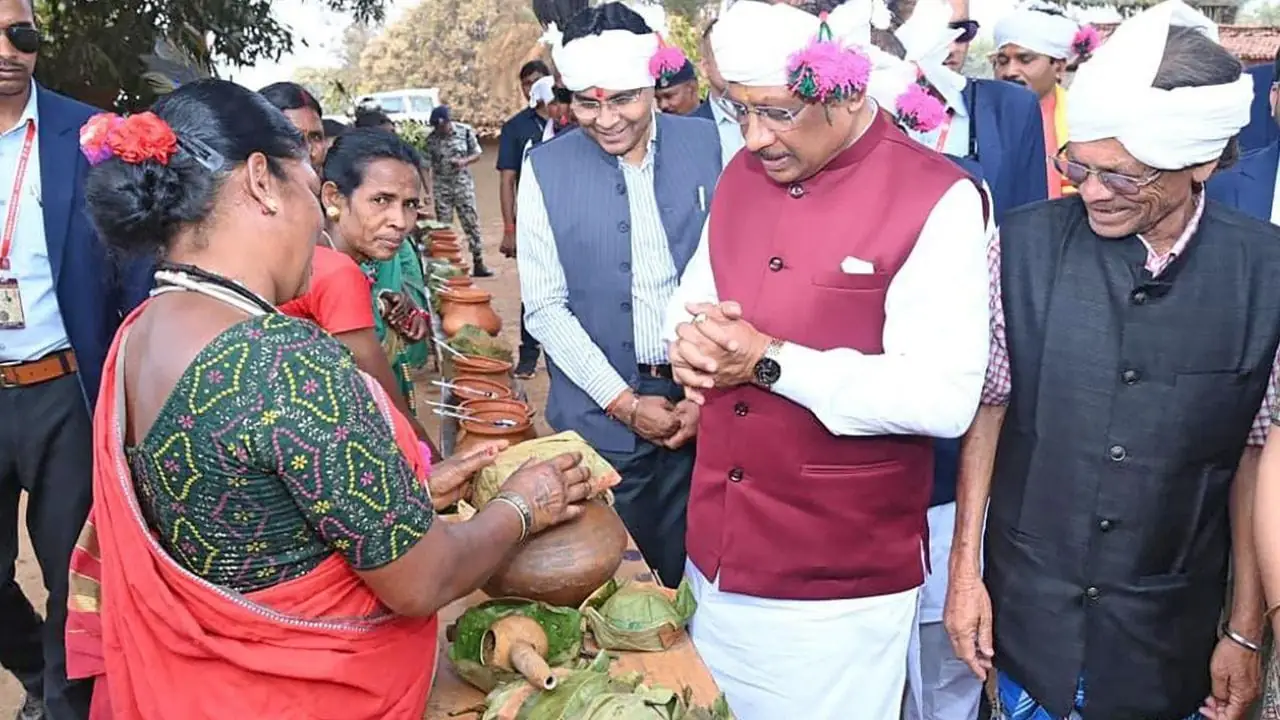
Deep in Bastar’s lush expanse, Chief Minister Vishnu Deo Sai’s Narayanpur visit culminated at the innovative Garhbengal Ghutul, where he championed the preservation of indigenous lore. Amidst traditional drumbeats and villagers’ affection, Sai donned the spirit of the land, proclaiming the site a vital guardian of tribal grandeur.
He closely reviewed the educational chambers for adolescents and the curated displays of attire, relics, and instruments that pulse with Bastar’s history. ‘Our efforts will eternally protect this unparalleled legacy,’ Sai vowed, outlining state-backed preservation drives.
Savoring an array of rustic delights—from chila roti and tomato chutney to ragi korma and exotic greens like munga bhaji—Sai experienced the profound connection between food, soil, and ancestors. This culinary showcase illuminated the resilient, self-sustaining tribal way of life.
Marveling at the bamboo-and-mud architecture guided by Forest officials and Padma Shri Pandiram Mandavi, Sai lauded the pillar carvings that narrate cultural epics. As a modern hub near Chendru Park, it educates youth and invites tourists to explore Adivasi social fabrics intimately.
The emotional core lay in tributes to stalwarts: Padma Shri recipients Hemchand Manjhi and Pandiram Mandavi, folk maestro Butlu Ram, and Chendru’s family. With officials like Minister Kedar Kashyap and Rupasai Salam, Sai partook in a communal meal, fostering unity.
This engagement heralds a renaissance for Bastar’s traditions, blending conservation with eco-tourism to ensure the region’s cultural symphony endures for future generations.