
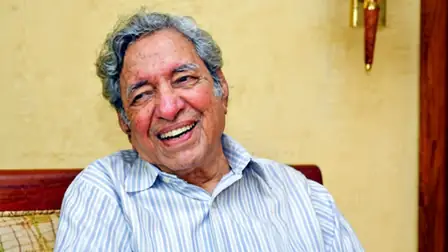
Ravi’s story is the heartbeat of Bollywood’s underdog narrative—a Delhi boy who traded soldering irons for symphonies. Born March 3, 1926, Ravi Shankar Sharma learned ragas eavesdropping on paternal bhajans, self-teaching harmonium and beyond, sans any formal tutelage.
Poverty’s grip made him an electrician, but dreams overrode duty. Mumbai 1950: penniless, he pounded pavements from studio to studio, bedding down at Malad station. Two years of such trials forged his resolve. Breakthrough arrived via Hemant Kumar in 1952’s ‘Anand Math’ chorus, launching his directorial voyage with ‘Albelu’ (1955).
Success cascaded: ‘Narsi Bhagat,’ ‘Chirag Kahan Roshni Kahan,’ ‘Nai Rahein,’ ‘Pehli Raat,’ culminating in ‘Chaudhvin Ka Chand’s’ nominated brilliance. Ravi’s signature? Lyrics preceding notes, birthing immortal songs. Filmfare wins for ‘Gharana’ and ‘Khandan’ highlighted a portfolio boasting ‘Nazrana,’ ‘Pyar Ka Sag ar,’ ‘China Town,’ ‘Gumrah,’ ‘Bhro sa,’ ‘Kajal,’ ‘Wakt,’ ‘Nil Kamal,’ and others—over 50 films, Mahendra Kapoor’s muse.
Post-1970 sabbatical, 1982’s ‘Nikaah’ roared back. As ‘Bombay Ravi,’ he ruled Malayalam screens till 2005. Death claimed him March 7, 2012, yet Ravi’s soundscape endures, a beacon for aspiring artists everywhere.