
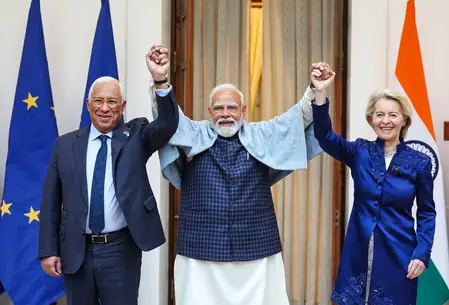
The ink barely dry on the India-EU free trade agreement, and Washington is reeling. This colossal pact spans 25% of global GDP, 33% of trade volume, with $25 billion in direct India-EU flows—trailing the US’s $45 billion but potent enough to unsettle the status quo.
US heavyweights sound the klaxon: senators, officials, analysts decry risks of being edged out as New Delhi and Brussels redraw trade maps. Senator Mark Kelly’s X salvo indicts Trump-era rifts: EU turns to India, others to China, leaving America isolated.
Hailed in New Delhi as epochal, von der Leyen’s vision unites 2 billion in open markets against geopolitical storms. Bessent’s CNBC broadside laments EU’s tariff defection, branding it disappointingly self-serving.
ITIF’s Balbontin dissects the deal’s lessons: Europe’s digital regs favor locals, India’s IP a hurdle, yet barrier reductions could indirectly aid US firms. Amid rising protectionism, ITIF backs this democratic trade lifeline, targeting China’s distortions.
Linscott’s Atlantic Council piece dials back drama—no trade quake imminent. Incremental tariff relief, regulatory clarity ahead; agriculture, IP, carbon taxes postponed. EU ratification battles await. Optimistically, it preserves—and may propel—US bilateral tracks.
From 2007 origins through 2021 revival, this deal’s momentum forces US reflection: in free trade’s fast lane, lagging invites peril.