
India’s textile and garment sector stands on the cusp of a seismic shift, courtesy of the landmark India-EU Free Trade Agreement. Pronounced a ‘game-changer’ by insiders, this pact is expected to metamorphose the industry over the coming 2-3 years, with analysts eyeing a 30-40% export leap in the first two.
AEPC Chairman Premal Udani, speaking frankly, revealed how the immediate removal of 11% EU duties will supercharge competitiveness. ‘Our textiles will outpace rivals like Bangladesh in European shelves,’ he predicted, foreseeing a redrawn competitive map.
This duty relief translates to tangible savings, enabling Indian exporters to price aggressively while maintaining quality. Udani envisions clusters like Tirupur scaling new heights, chasing ambitious export targets with renewed vigor.
Fellow AEPC member Ramu AR stressed the human angle: thousands of jobs in weaving, dyeing, and stitching units. ‘This is a boon for labor-intensive regions,’ he said, projecting Rs 1 lakh crore exports as an achievable reality.
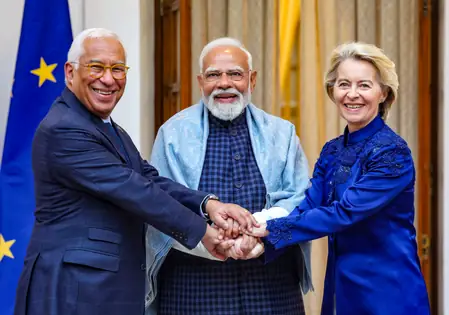
At the heart of the buzz is PM Narendra Modi’s Tuesday revelation. Labeling it India’s grandest FTA with 27 EU nations, he called it a prosperity roadmap. It opens floodgates for farmers’ produce, MSME innovations, and service exports into Europe’s vast marketplace.
Modi highlighted ancillary gains: amplified investments, collaborative R&D, and resilient supply networks. Far from a transactional deal, this FTA weaves a tapestry of enduring economic synergy between two global giants.
As the ink dries, textile mills are pivoting—investing in sustainable practices and digital integration to seize EU’s green demands. The agreement heralds not just growth, but a smarter, more integrated Indian textile powerhouse on the world stage.