
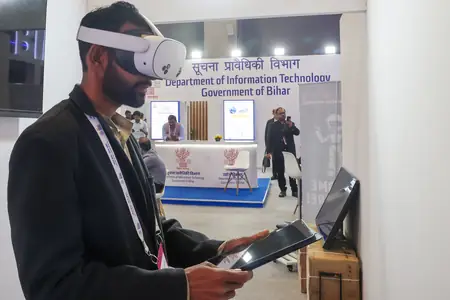
From Bihar’s fields to remote hamlets, artificial intelligence is reshaping rural India, fueling development under the ambitious ‘AI for All’ banner. Recent guidelines elevate AI as the key to inclusive progress, building on NITI Aayog’s 2018 strategy that hailed it as transformative.
Bihar grabbed headlines at Delhi’s India AI Impact Summit 2026, inking deals for AI hubs targeting agri, health, education, and e-gov. These moves aim to deliver services where they’re needed most.
Panchayati Raj’s ‘Sabhasar’ AI, rolled out in August 2025, converts meeting recordings into precise, multi-language minutes using Bhashini—now in 92,000+ panchayats, enabling SDG-centric work.
e-GramSwaraj covers 250,000+ panchayats with digital finance tools; Gram Manchitra maps assets for smart planning and disasters. AI Kosh’s vast repository—7,500 datasets, 273 models—powers innovations with massive engagement.
Bhuprahari’s AI-GIS tracks MGNREGA works in real-time, expanding for total transparency. Agri tools like Kisan e-Mitra inform on aids; national systems predict pests and monitor crops via multi-data fusion, enhancing output.
DIKSHA’s AI aids special needs education; Yuva builds future-ready skills from class 8. Bhashini, with 36 languages, eases access for low-literacy users—350 models, 1M downloads. BharatGen’s multimodal prowess in 22 languages, Adi Vani for tribes, and Pancham bot streamline governance.
AI trains locals, halts migration, virtualizes healthcare, making rural India vibrant and independent.