
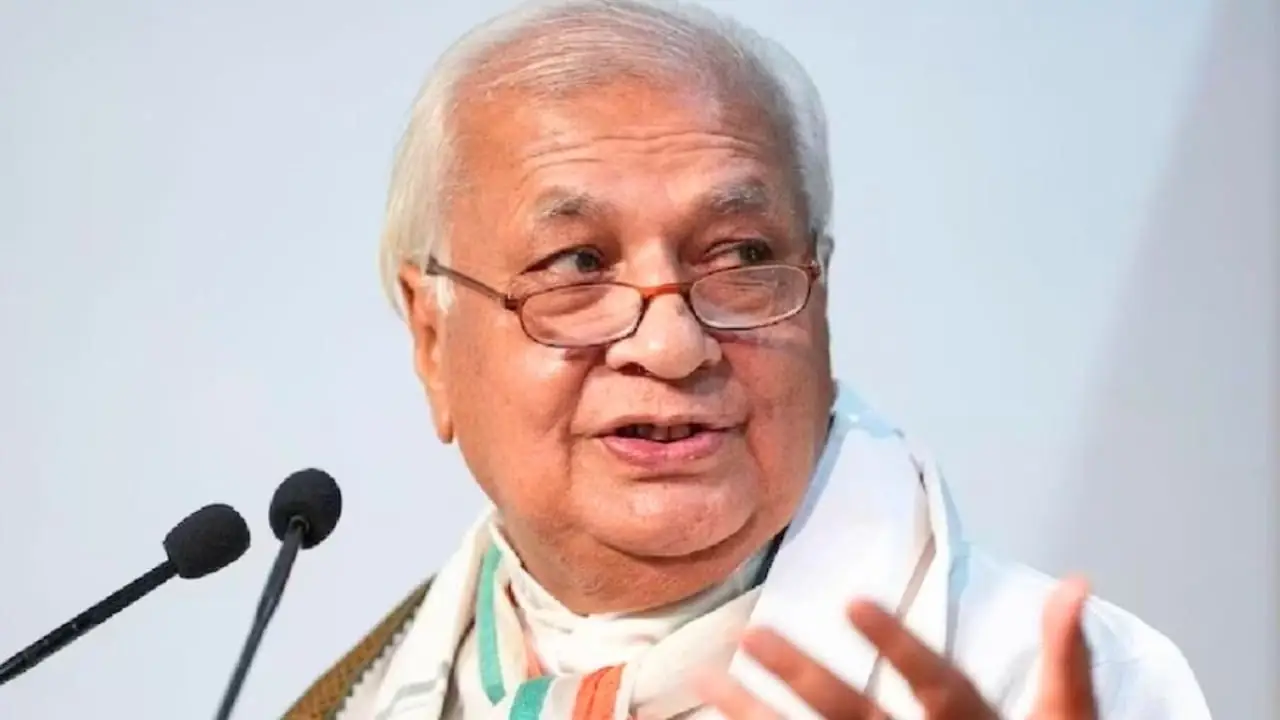
During the unveiling of Alok Mehta’s insightful biography ‘Revolutionary Raj: Narendra Modi’s 25 Years’ at Delhi’s Constitution Club, Bihar Governor Arif Mohammed Khan shared a personal pivot that reshaped his view of Narendra Modi—from vocal detractor after the 2002 Godhra tragedy to staunch supporter.
Khan was blunt: the riots initially fueled his opposition. Yet, an extended stay in Gujarat proved transformative. ‘Over four months of on-ground engagement with communities altered everything,’ he explained. Without it, old biases might persist.
He decried the vilification Modi endured as disproportionate and undeserved. ‘Few leaders have faced such misrepresentation,’ Khan observed, noting his conviction solidified post-immersion.
Modi emerged in Khan’s portrait as a steadfast visionary: patient, relentless, goal-driven. The book maps his 25-year odyssey to PM, introduced by Amit Shah.
Khan spotlighted Modi’s triple talaq ban via the 2019 Act, a pioneering shield for Muslim women aligned with international norms. ‘Future generations worldwide will hail this legacy,’ he prophesied.
The gathering featured Hardeep Singh Puri, Rajya Sabha’s Harivansh Narayan Singh, N.K. Singh, and K.J. Alphons. Puri celebrated economic milestones—from 2014’s $2 trillion base amid vulnerabilities to today’s $4.3 trillion powerhouse, fourth-largest globally, third imminent by IMF estimates.
‘We’re in a phenomenal era,’ Puri declared, linking to AI advancements. Khan’s narrative illustrates the power of firsthand truth-seeking amid polarized discourse.