
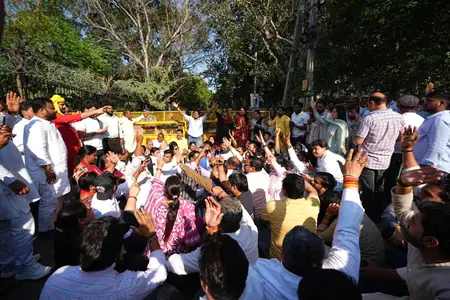
A stormy political confrontation unfolded in New Delhi on Friday, as AAP workers and MLAs protested vehemently outside the Vidhan Sabha. The trigger? Authorities’ refusal to allow opposition access, prompting accusations of BJP-imposed ‘dictatorship’ from the Aam Aadmi Party.
Saurabh Bharadwaj, at the forefront, marshaled a large crowd that roared slogans backing Arvind Kejriwal, summoned to the Privilege Committee. AAP alleged a calculated ploy to sideline rivals and reporters, stifling oversight.
Bharadwaj ripped into the no-live-stream policy, interpreting it as BJP dread over Kejriwal’s revelations. ‘History’s first: a committee grilling its ex-Speaker and CM,’ he highlighted. AAP’s rule saw open, media-friendly committees—a stark contrast, he said.
These forums demand utmost clarity, functioning like scaled-down legislatures. Barring entry to media and MLAs defies democratic ethos, Bharadwaj stressed, calling for at least press access if streams were off-table.
Atishi blasted the distraction tactics: Delhi grapples with toxic air, broken roads, filth, water woes, sewer chaos. ‘Prioritize people, not personal attacks!’ she urged. BJP’s one-year tenure has regressed the capital, inviting public scrutiny, she claimed.
Chief Whip Sanjeev Jha reinforced: Key challenges like water, pollution, Yamuna restoration, amenities ignored for petty politics. ‘Delhi demands results, not rhetoric,’ he concluded.
This bold AAP showdown amplifies governance critiques, positioning the party as citizens’ champion against perceived overreach. With urban pains mounting, the protest could sway opinion, challenging BJP to deliver on promises. The privilege saga continues, but eyes remain on Delhi’s streets for the true pulse.