
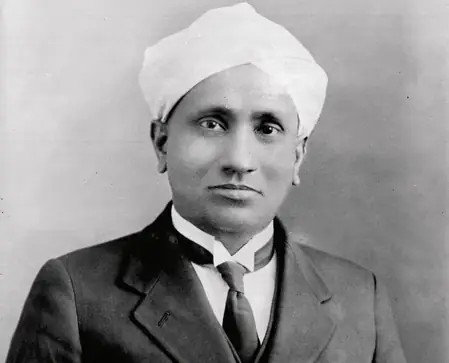
National Science Day spotlights Sir Chandrasekhara Venkata Raman’s monumental Raman Effect, born from bootstrapped brilliance and timely generosity. February 28 commemorates his 1928 revelation, institutionalised in 1986 by the government.
Hailing from modest beginnings in Tiruchirappalli, Raman’s curiosity about light’s behavior – sea blues, sky scattering – drove him. Financial woes stalled progress. Securing a stable job in 1907 as Kolkata’s Assistant Accountant General, he nurtured science secretly.
Pivoting to professorship at Calcutta University in 1917 unlocked research at IACS. Yet, the key spectrometer eluded him. Undeterred, he approached G.D. Birla with a high-stakes bargain: 22,000 rupees for the import, promising Nobel glory in return. Birla’s investment paid dividends.
On this day in 1928, Raman unveiled the inelastic scattering of photons, shifting wavelengths in materials – the Raman Effect. Rewarded with 1930’s Physics Nobel, he pioneered Asia’s scientific prestige.
From Vedic mathematics to Wootz steel, India’s innovation heritage shone through Raman. Modern celebrations feature laser shows, Raman spectroscopy workshops, and talks on optics’ applications in medicine, forensics, and materials.
Raman’s odyssey proves patronage unlocks potential. As India eyes Atmanirbhar science, his story fuels ambition, proving even humble starts can illuminate global paths.