
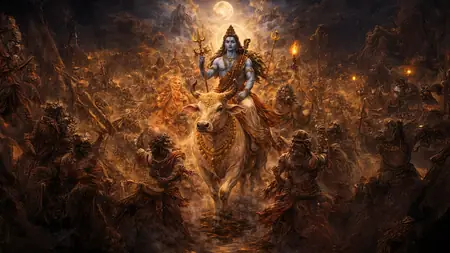
Devotees worldwide honor Maha Shivratri today, revering the divine marriage of Shiva and Parvati through elaborate pujas, vrat, and all-night worship. Central to this observance is the legendary story from Puranas of Shiva’s unparalleled wedding baraat—a parade so extraordinary it tested the very foundations of the world.
Mahadev arrived as groom in his ascetic glory: serpentine ornaments, vibhuti-smeared skin, trishul and damaru at ready, astride faithful Nandi. But the real spectacle was the entourage: heavenly hosts mingled with infernal beings. Ghosts, pretas, pisachas, and Shiva’s ganas paraded in forms defying imagination—headless horrors, four-eyed oddities, multi-handed mutants, plump phantoms, skinny specters, flanked by venomous reptiles and beasts.
The impact was immediate and overwhelming. Parvati’s mother Mainavati fainted upon sight, locals fled in dread, and she cursed Narada for matchmaking woes. Unfazed, Parvati’s devotion shone through. Yet the procession’s enormity caused Earth’s tilt; Shiva wisely tasked Rishi Agastya with southern relocation to steady her.
Upon Himalayan arrival, guided by Brahma-Vishnu, the Vedic ceremony united the couple eternally. Texts like Shiva Mahapurana’s Rudra Samhita and Ramcharitmanas’ Balakand immortalize this. Modern celebrations mirror it: Rudra abhishek, belpatra offerings, katha recitals, jagarans that banish sins and summon prosperity.
This narrative underscores Shiva’s transcendence over norms. Maha Shivratri invites reflection on love’s resilience amid chaos, promising devotees removal of obstacles and blissful lives. As temples light up tonight, the myth lives on, blending awe, faith, and festivity.