
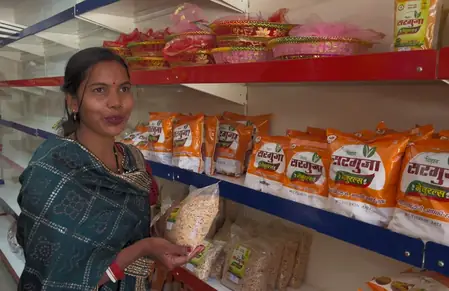
Prime Minister Modi’s vision of a self-reliant India is coming alive in Chhattisgarh’s Surguja, where the Lakhpati Didi scheme is catapulting rural women into the entrepreneurial spotlight. These once-homebound ladies are now market savvy producers, packaging their authentic goods to take on corporate giants.
At the heart of this transformation is the Aasha Bihan Bazaar, a city-based retail hub dedicated to self-help group outputs. Branded as ‘ChhattisKala’, the range includes health-focused staples like moringa powder, traditional mustard oil, premium jeera flower rice, and nutritious tikhur flour. These items are popping up in city shops and e-commerce sites, bridging the gap between rural makers and urban markets.
Kishun Nagar’s Aasha Devi is a poster child for success. With a Rs 5 lakh loan from the National Rural Livelihood Mission via the district panchayat, she launched her namesake store. ‘We used to lack a fixed selling space,’ she recalls. Today, it overflows with group-made pure products, drawing steady customers.
‘Proper branding was the missing link,’ explains District Panchayat CEO Vinay Agarwal. ‘Our didis’ crafts were superior, but without attractive packaging, they couldn’t compete. ChhattisKala fixes that, enabling statewide distribution.’
This isn’t mere commerce; it’s empowerment in action. Women are earning respect and revenue, fueling household growth and community development. Challenges like marketing hurdles are being dismantled, paving the way for sustainable livelihoods. Surguja’s story under Lakhpati Didi offers a blueprint for rural India, highlighting how targeted support can unlock untapped potential and foster economic inclusion.