
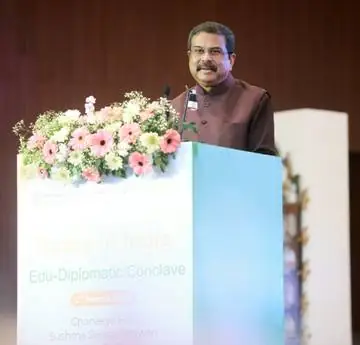
At a high-profile gathering in New Delhi’s Sushma Swaraj Bhawan, Education Minister Dharmendra Pradhan spotlighted the transformative power of the National Education Policy 2020. The policy, he said, has redefined education across India, arming the nation with the tools to achieve developed status by its centennial independence year, 2047.
India’s strength lies in its vibrant youth demographic, actively contributing innovative ideas and tech advancements. Pradhan shared these insights while keynote-speaking to diplomats from over 50 countries at the Study in India Edu-Diplomatic Conclave 2026. He outlined policies encouraging top foreign universities to plant roots in India, backed by UGC’s efficient, transparent framework that cuts red tape dramatically.
For Indian students, this spells opportunity: elite global education at home. Pradhan called for synergies between foreign institutions and India’s burgeoning innovation ecosystem. The event positioned India as an emerging education powerhouse, eager to host international scholars for joint research and learning.
Post-NEP 2020, curricula emphasize multidisciplinary learning, allowing students to explore diverse fields concurrently. Skill-building takes center stage, crafting job-ready graduates beyond mere academic credentials.
Notably, applications from leading universities in Australia, Italy, the UK, and the US secured nods within a month under new rules. Conversations tackled promoting ancient Indian wisdom globally, tech like AI in teaching, skill-education globalization, and the forward-looking India Innovation 2026.
Education, Pradhan noted, transcends borders even in turbulent times, fostering bonds via knowledge sharing. He implored global leaders to integrate their academic networks with India’s, signaling the country’s bold claim to educational supremacy. The invitation is clear: Study in India, pioneer discoveries, and co-create progress.