
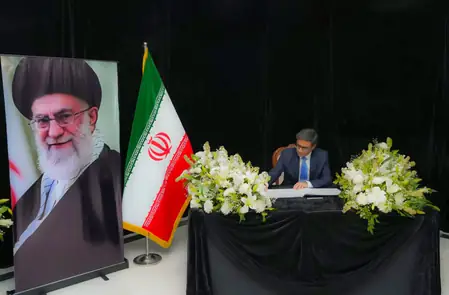
Thursday’s MEA briefing in New Delhi turned into a masterclass in fact-checking as spokesperson Randhir Jaiswal dismantled claims that India lagged in condoling the death of Iran’s Supreme Leader Ayatollah Ali Khamenei. With a call for informed discourse, Jaiswal stressed avoiding commentary sans solid information.
Addressing the five-day delay accusation head-on, Jaiswal highlighted Foreign Secretary Vikram Misri’s proactive step. On March 5—the precise day the condolence book opened at the Iranian Embassy—Misri signed it, representing the Indian government, and met Ambassador Mohammad Fathali to share condolences.
‘The Foreign Secretary expressed sympathies on the very first day,’ Jaiswal clarified. ‘It’s essential for people to know the facts before going public. Steer clear of baseless observations.’ The embassy’s appeal resonated widely, attracting signatories from March 5 through 9: a tapestry of leaders including politicians, officials, clergy, intellectuals, educators, and reporters, all voicing solidarity with Iran.
Iran’s mission in India acknowledged the gestures on March 11, appreciating the collective mourning. This unfolded against the shocking February 28 strike by Israel and the US that killed 86-year-old Khamenei, alongside elite commanders like the defense minister and IRGC chief. The toll extended to his family—daughter-in-law, daughter, grandson slain, and wife lost to injuries.
India’s adherence to protocol amid geopolitical turbulence reaffirms its reliable diplomacy. Jaiswal’s admonition against misinformation promotes a culture of accuracy, crucial in an era where viral claims can strain alliances. The incident bolsters India’s image as a thoughtful global player.