
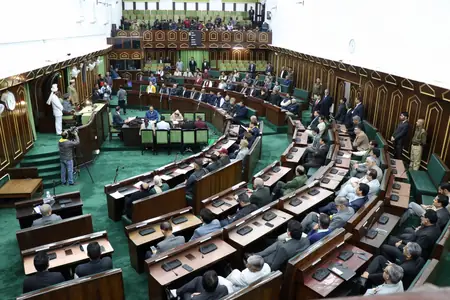
Wednesday’s Jammu and Kashmir Assembly session was marred by unprecedented disruption after BJP MLA and LoP Sunil Sharma’s remarks on Peer Panjal drew sharp ire from the ruling National Conference-Congress alliance. The treasury benches’ boycott call led to repeated adjournments, paralyzing legislative business.
The flashpoint originated the previous day when Sharma, fielding queries on Peer Panjal’s divisional status push, reportedly dismissed knowledge of the area—a sensitive region home to millions craving better infrastructure and administration.
Proceedings ground to a halt amid deafening slogans and desk-thumping. Speaker’s pleas for calm were drowned out, culminating in a 15-minute break that yielded no resolution. Restarting only reignited the frenzy, with demands for Sharma’s resignation echoing alongside apology pleas.
Prominent voices like MLA Iftikhar Ahmad vowed to sustain the protest, framing it as a defense of regional dignity. The standoff persisted despite threats of disciplinary measures.
Deputy Chief Minister Surender Kumar Choudhary seized the moment to counterattack, alleging BJP’s role in crippling Jammu’s healthcare by forcing the Shri Mata Vaishno Devi Medical College shutdown amid admission controversies—all while preaching development.
As the day ended without progress, the incident exposes fault lines in J&K’s post-election politics. Peer Panjal’s long-standing grievances, from poor connectivity to limited opportunities, now symbolize broader Jammu-Pir Panjal rift. Resolution seems distant, potentially derailing the session’s remaining days and amplifying calls for administrative reforms.