
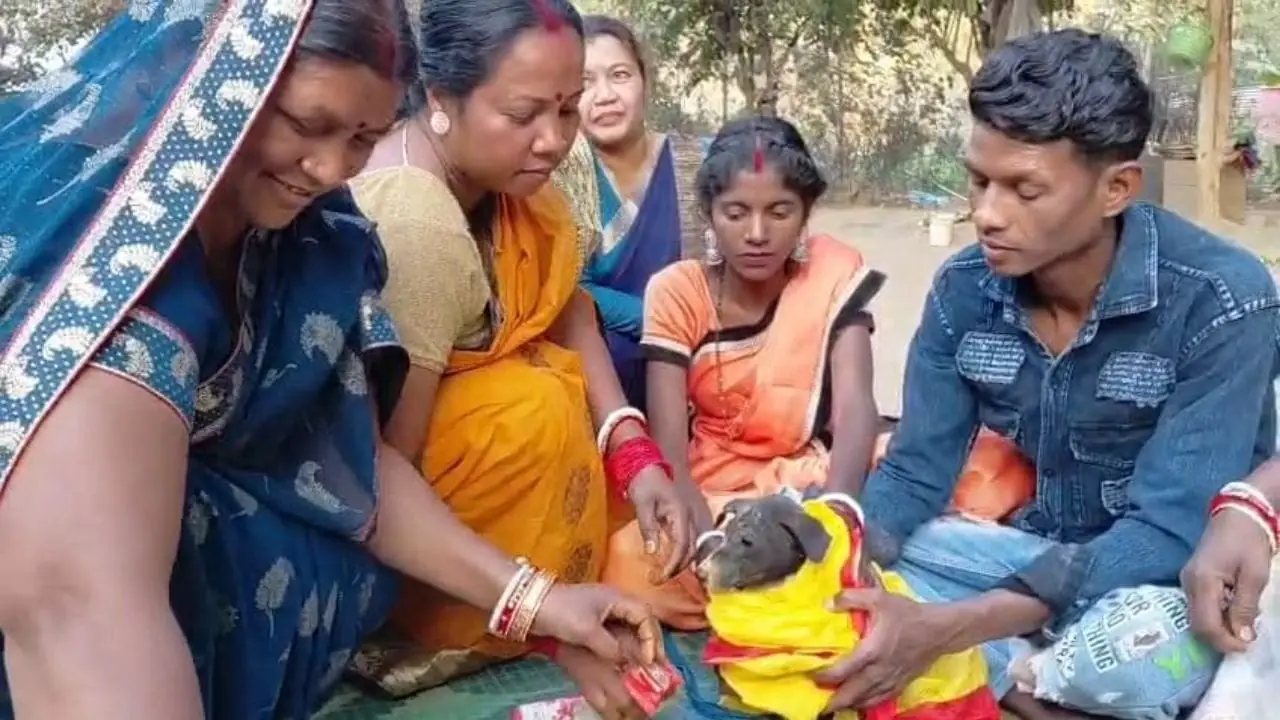
Jamshedpur’s Shakosain neighborhood buzzed with an extraordinary sight: two toddlers in wedding finery, procession-led to ‘marry’ a dog. Triggered by upper teeth sprouting prematurely, this Ho tribal ritual aims to dispel fears of catastrophe during Mange Parab’s Harmangeya climax.
Deep-seated beliefs label early upper tooth growth as a harbinger of evil. To counter it, the community orchestrates a faux canine union, positing the animal as a misfortune magnet. Once completed, the ‘dosh’ vanishes, they say, securing the child’s destiny.
Baroats rolled out with gusto—ghungroos jingling, colors ablaze, crowds cheering. Every step echoed matrimonial customs, yet it was all symbolic. Children face no lasting ties, but the spectacle fuels debate on superstition’s sway.
Generations-old in Jharkhand’s tribal heartlands, it’s championed by elders as ancestral armor against supernatural threats. Comparable is the pre-dawn navel-scorching on Chidi Daag day post-Makar Sankranti, hailed as a lifelong shield against abdominal woes.
In an era of vaccines and dentistry, such rites seem archaic, even dangerous. Awareness drives push for science over myth, but communities cling to them as identity pillars. Balancing respect for culture with child welfare remains the core challenge, as these practices endure against the tide of change.