
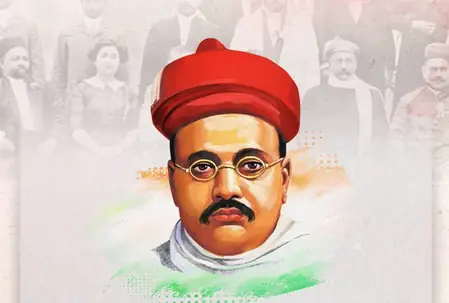
India’s political heavyweights converged virtually on February 19 to honor Gopal Krishna Gokhale, the erudite moderate whose blend of intellectual rigor and social activism fueled the independence era, marking his 108th death anniversary.
Amit Shah, Union Home Minister, set the tone on X: ‘By rallying youth into the freedom fight and championing anti-untouchability drives alongside reforms, Gokhale stood tall for his forthright patriotism. Paying obeisance today.’
Echoing this, Nitin Gadkari lauded the ‘shrewd politician who pioneered constitutional paths to liberty, a beacon of social leadership and reform,’ with profound homage.
Yogi Adityanath, UP CM, highlighted enduring value: ‘Your guidance to the freedom struggle and societal betterment forms priceless national wealth. Ideals that perpetually fuel our democratic spirit.’
Himanta Biswa Sarma of Assam elaborated on Gokhale’s blueprint for progress: strengthening nationhood via reforms, schooling expansion, and equity, while embedding public life’s core tenets of probity, clarity, and duty. ‘Respectful recall of his service.’
Opposition leader Mallikarjun Kharge positioned Gokhale among elite freedom icons and Gandhi’s guide, whose anti-colonial fervor endures as a beacon for equity, liberty, and development.
These gestures illuminate Gokhale’s stature as India’s ‘uncrowned king’ of liberalism. Educated at Elphinstone College, he edited the Sudharak newspaper, advocating progressive causes. His parliamentary interventions in London exposed colonial excesses, while domestically, he pushed for Indianization of services and fiscal decentralization.
Gandhi credited Gokhale as his ‘political guru’ post their 1915 meeting. Gokhale’s vision—measured agitation, education-led uplift, and ethical politics—offers lessons amid contemporary challenges like social divides and governance ethics.
As tweets and posts flood timelines, Gokhale’s memory reinforces unity in diversity, reminding all of moderated paths to transformative change.