
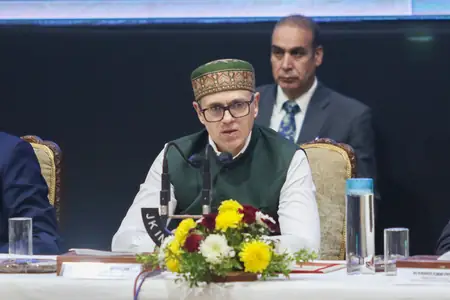
Political tempers flared in Srinagar’s assembly halls as BJP MLAs halted proceedings on Wednesday, fixated on Chief Minister Omar Abdullah’s alleged offensive comments. What began as budget discourse snowballed into a full-blown confrontation, exposing fault lines in J&K’s political landscape.
Tuesday’s trigger: While concluding debate on the February 6 budget, Abdullah’s phrasing irked BJP benches. They stood en masse, seeking retraction amid uproar. The CM signaled readiness to apologize but was drowned out by the melee.
Wednesday amplified the discord. BJP members, including Sham Lal Sharma, walked out pre-question hour, returned to an empty CM’s chair, and launched into anti-government chants. Ignoring Speaker Abdul Rahim Rather’s rulings—that post-walkout matters were moot and unregistered—they occupied the well in defiance.
Sharma invoked assembly traditions, decrying the CM’s lexicon as unparalleled and unacceptable. He directly challenged the House Leader on withdrawing the impugned words, leaving it to ‘inner voice’ if unmet, and deferred to the chair.
The Speaker’s pleas for order, emphasizing debate only with the Leader present, fell on deaf ears. He termed Tuesday’s scene ‘regrettable,’ promising space for CM’s statement.
Treasury’s Sakina Itoo fired salvos, pointing to BJP’s slurs against Deputy CM Choudhary and fabrications. Choudhary advocated scrubbing mutual indiscretions for seamless functioning—a move Sunil Sharma rebuffed, spearheading yet another slogan-filled exit.
Sharma vowed unrelenting disruption sans unconditional atonement. This saga, rooted in linguistic skirmishes, mirrors ideological battles over governance and representation in the UT. As echoes of protest linger, the assembly’s productivity hangs in balance, urging leaders toward reconciliation for public good.