
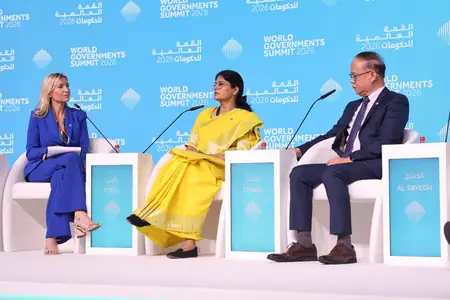
Advancing Universal Health Coverage requires embedding integrative medicine into public health, declared Anupriya Patel, Union Minister of State for Health, at the World Governments Summit in Dubai. Her Thursday speech on the summit’s third day spotlighted the limitations of cure-centric systems amid escalating lifestyle diseases.
In the focused discussion ‘From Policy to Practice: Investing in the Future of Integrative Medicine,’ Patel addressed root causes like urbanization’s toll, unhealthy eating, lack of exercise, and pervasive stress. These are propelling NCDs and mental health crises, rendering traditional treatment models obsolete.
She championed AYUSH integration as a strategic imperative, creating preventive, inclusive health networks that align with UHC aspirations. India’s proactive stance transforms venerable traditions into evidence-backed, mass-deployable tools.
Patel highlighted policy-driven successes: the NHP 2017 anchors this fusion across care tiers. Primary levels buzz with Ayushman Arogya Mandirs providing AYUSH and yoga. Secondary facilities host AYUSH blocks, and tertiary care sees dedicated units emerge. Traditional medicine permeates education, ensuring future-proofing.
Echoing WHO stats—88% of members favor traditional systems—Patel positioned India as a trailblazer. Her address not only critiques current shortcomings but charts a forward path: leveraging cultural strengths for resilient, equitable health systems that prioritize wellness over illness.