
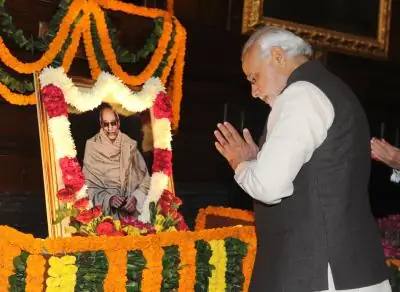
A historic shift unfolds at India’s presidential palace: the statue of British architect Edwin Lutyens will be replaced by that of C. Rajagopalachari during ‘Rajaji Utsav’ on Monday. This unveiling in the Central Hall symbolizes the nation’s evolving narrative, prioritizing freedom struggle icons over colonial holdovers.
Prime Minister Modi, in his latest ‘Mann Ki Baat’ address, tied this to his ‘Panch Pran’ pledge from Azadi ka Amrit Mahotsav. Shedding the mentality of subjugation tops the list, and Rashtrapati Bhavan’s action exemplifies this ethos by installing symbols of indigenous pride.
Who was Rajagopalachari? The first Indian to serve as Governor-General post-independence, he embodied service-oriented leadership. Modi praised his ‘restrained demeanor and independent mindset,’ qualities that defined his tenure amid turbulent times.
The PM lamented how, for years after 1947, statues of British officials dotted the grounds, eclipsing tributes to India’s builders of freedom. ‘Our greatest sons were denied recognition while foreign administrators were glorified,’ he observed pointedly.
This replacement isn’t mere decoration—it’s reclamation. An accompanying exhibition, running February 24 through March 1, will immerse visitors in Rajaji’s world: his Gandhian roots, authorship of the iconic ‘Uncle Pai’ stories for children, and his prescient warnings against excessive state control.
Modi called on every Indian to explore this exhibit, arguing that such engagements foster a deeper appreciation for the values that propelled the nation forward. As India marks milestones of self-rule, gestures like these cement a legacy of self-respect and sovereignty.