
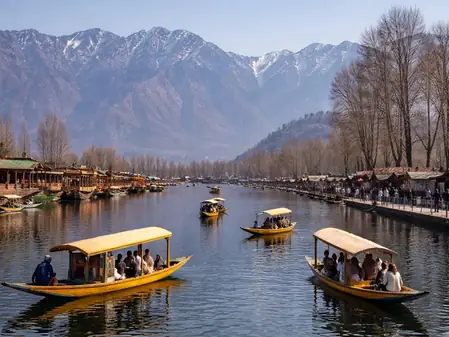
In a startling meteorological shift, Srinagar clocked 21°C on Saturday, shattering February’s all-time high temperature record previously held at 20.6°C since 2016. The weather office noted this as roughly 10°C above the monthly norm, reflecting broader unusual patterns in the region.
Neighboring spots in Kashmir mirrored the trend: 11.5°C in Gulmarg and 17.2°C in Pahalgam. Jammu division wasn’t spared, with Jammu at 25.2°C—exceeding averages by 2.9°C—alongside 25°C in Katra, 19.9°C in Batote, 19.8°C in Banihal, and 21.3°C in Bhadarwah.
Compounding the issue is the deficient winter precipitation across Jammu and Kashmir. The essential ‘Chillai Kalan’ period delivered far less snow than required, failing to adequately charge the high-altitude water reservoirs that communities depend on through summer.
Snowfall was sparse and delayed, heightening anxieties among agricultural stakeholders. The prospects of summer droughts, irrigation shortfalls, and potable water emergencies loom large, threatening livelihoods in farming and horticulture.
February’s temperature spike makes further heavy snow unlikely soon. Hopes now pivot to March for potential relief, underscoring the urgent need for vigilant weather monitoring and adaptive strategies to safeguard the valley’s fragile water ecosystem.