
Jharkhand’s tribal regions pulse with the infectious energy of Baha Parb, the Santhal society’s floral extravaganza. From Falgun’s fifth day, villages erupt in month-long festivities honoring flowers, fertility, and fellowship—much like Holi, but with water and blossoms replacing pigments.
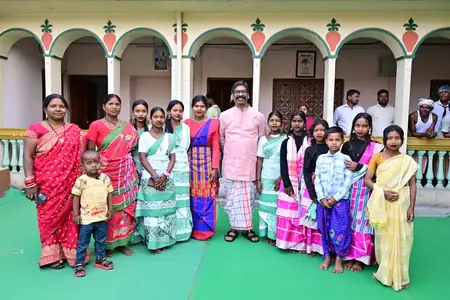
Thursday saw CM Hemant Soren at the forefront in Ramgarh’s Nemra, his paternal village. He trekked alongside residents to Jaher Than, the sacred grove, where rituals unfolded under priests Chaitan Tudu and Chhotu Besra. Amid invocations for prosperity, Soren played the mandal, his presence swelling crowds from nearby hamlets who paraded with drums resounding.
Core traditions include archery veneration, ecstatic dances to mandal and dhol, and prasad of seasonal flowers. This parb ignites wedding seasons and, in pockets, traditional hunts plus grand community meals. Its reach spans Jharkhand’s countryside to Santhal enclaves across India, Nepal, Bangladesh, Myanmar, Bhutan, and America.
Soren extended heartfelt greetings, calling Baha a beacon of ecological wisdom and social cohesion. In an era of cultural erosion, such immersions by leaders spotlight the vitality of indigenous practices, weaving past and future into Jharkhand’s diverse cultural mosaic.