
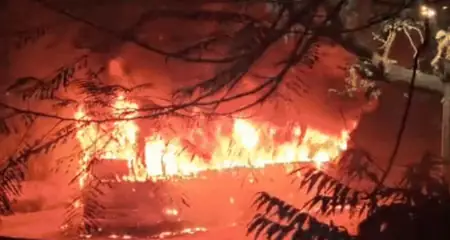
Delhi’s Vikas Puri neighborhood was plunged into mourning after a catastrophic fire ripped through a stationary bus, fatally trapping 25-year-old helper Sunil inside. The early morning blaze on February 9 has left investigators piecing together a sequence of fatal errors.
Sunil, who was catching some sleep in the bus, reportedly lit an incense stick against mosquitoes—a decision that allegedly ignited the deadly fire. The flames spread swiftly, turning the nearly new Haryana-registered private bus into a fireball within minutes.
Local residents spotted the ominous smoke and alerted authorities immediately. Delhi Fire Services mobilized fire engines, battling the intense heat for a prolonged period before gaining control. Harrowing footage on social media depicts the bus shrouded in flames, a grim spectacle that drew crowds.
Upon dousing the fire, firefighters recovered Sunil’s severely burned body from within. It was promptly sent for forensic examination. Police have registered a case and are probing all angles, including potential short-circuits or fuel ignition alongside the suspected incense trigger.
The bus, operational for only 28 days, prompts scrutiny of its safety features. This incident echoes recent Delhi fires: February 6’s airport ground blaze and the devastating January 7 fire in Mukundpur Metro apartments, claiming a DMRC family of three—Ajay Vimal, Neelam, and young Jahnavi.
Experts emphasize the perils of open flames in vehicles packed with upholstery and wiring. With urban density rising, such accidents demand robust preventive measures like smoke detectors in public transport and bans on combustibles inside.
As the community grieves, this tragedy amplifies calls for enhanced fire safety training and infrastructure upgrades across the capital.