
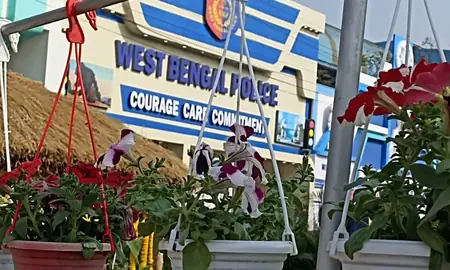
Ahead of crucial West Bengal elections, an eyebrow-raising order from police HQ has transferred three female civilian volunteers, drawing sharp scrutiny. A senior official confirmed the Bhavani Bhavan directive on Monday, an unprecedented step that challenges established protocols.
No prior instances exist of the headquarters formally relocating these volunteers, who are distinctly separate from sworn police officers. The Calcutta High Court has repeatedly clarified their non-police status, prohibiting deployment in law enforcement roles or auxiliary official duties.
The opaque transfer reasons compound the anomaly. This fits into a flurry of pre-poll police overhauls: IPS bigwigs shifted statewide, station heads rotated. Civilian involvement now amplifies concerns over election preparedness.
The volunteer initiative dates to 2011 Trinamool governance, with initial batches of 2,000 in Howrah and Asansol. Local police stations managed hires per government orders, maintaining distance from central command.
Breaking this decentralized model, the current action signals potential centralization. Stakeholders question if it aligns with court mandates or hints at election maneuvering. Transparency deficits only heighten doubts.
Broader context reveals a police force in flux. Frequent reshuffles aim for efficiency but invite bias claims. Volunteers, meant for community support, now navigate legal gray zones despite judicial clarity.
As campaigns intensify, this development could sway narratives on administrative neutrality. It prompts reflection on volunteer programs’ future: enhancement or overhaul? Bengal’s voters demand answers, ensuring judicial precedents guide any reforms.