
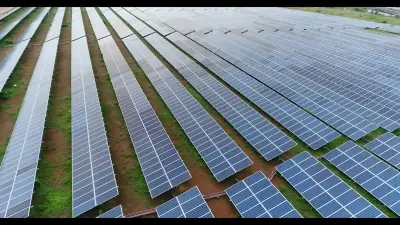
To reconcile its surging GDP with net-zero targets, India faces the colossal task of investing $145 billion every year primarily in power plants, battery storage, and grid enhancements. Wood Mackenzie’s comprehensive report lays bare this necessity.
Published Tuesday, the analysis praises India’s trajectory towards 1.5 billion tonnes annual coal production by 2030, while advocating coal gasification to broaden energy options and reduce import risks.
Natural gas emerges as a cornerstone, with consumption forecasted to leap from 72 billion cubic meters this year to more than 140 billion by 2050. Over 65% of the uptick will stem from industries, sustaining a majority stake through 2050.
The report flags discrepancies between economic vigor and environmental commitments but hails India as a prime contender to supplant China in solar and battery manufacturing. As buyers seek supply diversity, India’s industrial ecosystem provides a strategic advantage.
Joshua Ng, Vice Chairman Asia Pacific at Wood Mackenzie, warned: ‘India needs to fortify energy defenses and craft a low-emission framework to claim economic supremacy.’
Rashika Gupta, Vice President for Power and Renewables Research, broke down the $1.5 trillion outlay from 2026-2035: ‘Beyond new generation, it targets resilient wires, grids, and delivery systems.’ Pivotal reforms like the Electricity Amendment Bill could unlock private capital by intensifying distribution sector rivalry.
Near-term reliance on oil and gas persists, with crude imports potentially climbing to 87% by 2035. Recommendations include elevating domestic exploration and wooing global energy giants.
This blueprint charts a pragmatic course for India’s energy metamorphosis, balancing immediacy with long-term ecological imperatives.