
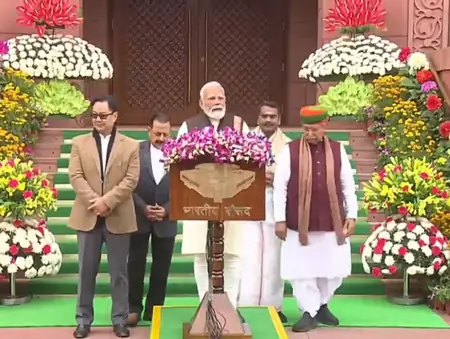
Finance Minister Nirmala Sitharaman is set to etch her name deeper into history by tabling the Union Budget 2026 consecutively for the ninth time, a first for any woman in this role. PM Narendra Modi described it as ‘a glorious milestone in parliamentary history’ during a media interaction in New Delhi.
This comes ahead of the Economic Survey 2026 presentation. Modi painted a broader picture: ’21st century’s first quarter is history; we’re stepping into the second. The road to Developed India by 2047 hinges on the coming decades, starting with this landmark budget.’
The February 1 event marks the Modi government’s 15th budget and the second full one post-2024 elections. It’s crafted by an expert ensemble navigating India’s economic landscape.
Economic Affairs Secretary Anuradha Thakur helms budget formulation, prioritizing efficient fund distribution, cost controls, and growth-stability synergy for 2026-27.
CEA V. Ananth Nageswaran supplies vital data on GDP forecasts, global uncertainties, and trends across farming, manufacturing, and services, guiding policy overhauls.
Arvind Srivastava, Revenue Secretary, handles his inaugural budget, supervising income taxes, GST, and tariffs. Expenditure chief Vumlunmung Vualnam oversees outlays, subsidies, and programs, maintaining fiscal health.
In financial services, M. Nagaraju enhances banking access and social security. Arunish Chawla drives revenue from asset sales and management.
Analysts predict focus on capex, MSMEs, and rural revitalization. Sitharaman’s budgeting prowess, honed over years, positions this document as a blueprint for inclusive growth, job generation, and innovation, propelling India towards superpower status.