
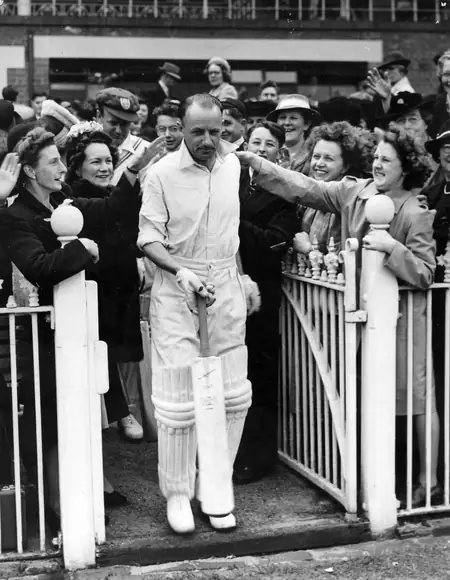
Picture a 10-year-old Don Bradman, racquet in hand, dominating tennis courts in Australia. Then, a single trip to Sydney Cricket Ground with his father flipped his world. That spark led to a Test average of 99.94 over 52 matches—6,996 runs, 29 centuries, 13 fifties, and 12 double tons. Bradman didn’t just play cricket; he rewrote its history.
International bowlers first glimpsed his potential in the 1930 Ashes. Seven innings, 974 runs: a record etched in stone. His debut in 1928 had been modest (18 and 1), but that was history’s oversight.
Never out for zero in Tests, Bradman owned England with 19 hundreds. The 1932-33 Bodyline tactics—fast, short balls at his body—were England’s desperate ploy. Averaging 56, he neutralized them, turning pain into performance.
Bradman’s methods were unorthodox: childhood practice hitting a golf ball at a tank with a stump. This built his impeccable timing and footwork. By career’s end, he stood as Australia’s greatest, influencing strategy and skill for decades.
Born August 27, 1908, he lived to 92, passing in 2001. Bradman’s tale is cricket’s ultimate underdog-to-icon saga, proving one pivot can conquer worlds. Modern stars like Kohli and Smith bow to his throne, forever the ‘Don’ of the crease.