
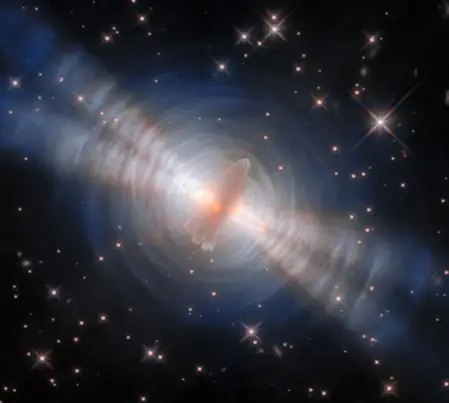
Pulsars are nature’s grandest light shows, neutron stars rotating with such velocity they pulse hundreds of times each second. Social media is abuzz with these ‘cosmic lighthouses,’ as NASA demystifies their rapid spins, potent radio emissions, and unparalleled magnetic grip on the imagination.
These relics form when colossal stars—8 to 20 solar masses—detonate in supernovae, collapsing cores to nuclear densities. The resulting object, roughly 20 kilometers wide, harbors magnetic fields a quadrillion times Earth’s, channeling radiation into narrow cones. As the star spins, these cones sweep space, pulsing when aligned with Earth.
The first sighting came 50 years ago via Cambridge’s radio telescope, revealing signals every 1.33 seconds. Initial alien hypotheses gave way to scientific triumph, with Hewish and Ryle claiming the 1974 Nobel. Now, over 2,000 are tracked, from slow tickers to millisecond marvels.
Enter NASA’s NICER, the premier pulsar probe deployed to the ISS in 2017. Focusing X-rays from million-degree atmospheres, it maps surface hotspots and magnetic intricacies. Data from the pioneering PSR B1919+21 pulsar refined our grasp of interior dynamics, where extreme gravity crushes particles into exotic states.
Keith Gendreau, NICER’s principal investigator, notes its superior resolution yields precise size and weight stats, sharpening predictions of matter behavior. This mission transcends observation; it tests general relativity and peers into star death’s mechanics.
Pulsars also power innovative tech, from gravitational wave detectors to interstellar GPS. Their predictable flashes synchronize global networks, potentially unveiling ripples in spacetime. As NASA delves deeper, pulsars illuminate black hole births, element forging, and universal extremes—proving these tiny titans wield outsized influence on cosmic narratives.