
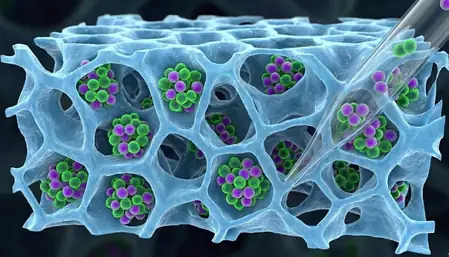
A team at IIT Bombay has pioneered a simple yet advanced technique for recovering immune T-cells from lab cultures, significantly enhancing the effectiveness of CAR T-cell therapies against cancer. This scaffold-driven approach promises to streamline immunotherapy by preserving cell health during the crucial retrieval phase.
Immunotherapy like CAR T-cell treatment extracts T-cells from patients, engineers them in vitro to attack tumors, amplifies their population, and returns them to combat malignancy. The weak link? Safely collecting these expanded cells before reinfusion. Long-standing challenges in maintaining cell activity and yield have limited therapy’s reach.
Professor Prakriti Tayalia, from IIT Bombay’s Biosciences and Bioengineering, emphasized, ‘While cell recovery appears basic on paper, it’s a formidable real-world obstacle. Lacking viable cells hampers testing and therapeutic deployment.’
Innovating with electrosprayed polycaprolactone scaffolds—fine nanofiber meshes akin to fishnets—the team created a nurturing environment echoing bodily conditions. Jurkat T-cells, key models for T-cell research in cancer and HIV, thrived inside, infiltrating and binding tightly to the fibers under microscopic scrutiny.
Trypsin-based extraction led to substantial cell mortality. Opting for Accutase, a milder alternative, yielded superior results: elevated viability, preserved clustering vital for replication, and robust post-recovery growth akin to fresh T-cells.
Beyond immediate gains, this method supports high-throughput cell production, vital for commercializing CAR T therapies. It could transform treatment landscapes for hard-to-treat cancers, making advanced care more feasible worldwide. IIT Bombay’s work underscores India’s rising biotech prowess, blending ingenuity with clinical impact.