
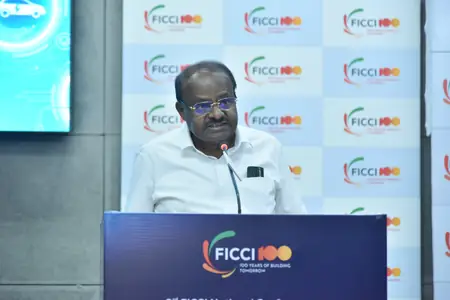
In a bold proclamation at the FICCI EV conference, Heavy Industries Minister H.D. Kumaraswamy asserted India’s readiness to become the world’s leading center for electric vehicle production and cutting-edge innovation. Clear policies paired with industry commitment could make this a reality, he said.
During a media briefing in the event’s third session, Kumaraswamy vowed to embrace top strategies for accelerating EV uptake. Tying it to ‘Viksit Bharat 2047’ and ‘Make in India,’ he explained how this focus would invigorate homegrown manufacturing, localization, and elevate India to global supremacy in EVs, batteries, and components.
Drawing on data, he noted auto component exports doubling to $16.9 billion from $8 billion over ten years—a testament to India’s supply chain integration and manufacturing reliability.
Amitabh Kant, former NITI Aayog head, painted a trillion-dollar picture for the global EV market next decade. As countries localize trade and reduce dependencies, India must step up as the dependable EV hub. ‘Beyond climate goals, EVs offer massive economic, industrial, tech, and strategic wins—making the shift central to Developed India 2047,’ Kant emphasized.
Highlighting progress, Vikram Handa of FICCI described the shift to ‘Green Mobility 2.0’: a full-spectrum chain from mineral refining to battery assembly and diverse vehicle production, including infrastructure. This holistic approach highlights India’s industry direction and future promise.
With such momentum, India stands at the cusp of EV dominance, leveraging growth stats, expert insights, and ecosystem depth to forge a greener, more prosperous mobility landscape.